Want Quick Happy tips? Head over to Marc and Angels Hack

Practical Tips for Productive Living - Wonderful Quick and effective reading articles around the wellbeing, happiness and positiveness in bullet points numbers. I personally use it for easy reference

Want quick inspiration? Inspiration Peak is the place to go!

Check out and subscribe to Inspiration Peak in my Fav Websites for everyday quotes. Works a charm every single day. You're more than welcome to suggest a quote too!

Mind, Body, Green - Ultimate Wellness articles

I love their articles for it is written by various authors coming from wellbeing, yoga, holistic nutrition background that brings you closer to nature and serenity...

Lifehacker - Tips, tricks, and downloads for getting things done

Slightly drawn towards IT tips but they do also have tips about anything and everything you need under the sun, including tips for baking and cleaning! Check them out

Showing posts with label Health. Show all posts

Sunday, July 23, 2017

Stretching Doesn't Work (The Way You Think It Does)

This is so interesting and it does makes a lot of sense. The body will lengthen only the mind is ready.

Original post here.


Does stretching make you more flexible? I know the obvious answer to this question, based on what we’ve all been told about the merits of stretching, is, “Duh! Yes!” But it turns out that might not be the case. But it might be the case. At least a little. But not totally. Okay, let me explain.


Stretch Your Bits or Stretch Your Mind?

I’ve had a few things come up recently that have me rethinking the common stretching belief that goes something like this: stretch tight bits in your body and they will get longer/more flexible/more supple.

The things that have me rethinking this are:

  1. An interview I did on the Liberated Body Podcast with Jules Mitchell who is writing a book (and just finished a thesis) on the science of stretching.
  2. A guide I am putting together on how to resolve short hamstrings (it’s out on Liberated Body in October), which had me immersed in the research about how hamstrings specifically manage to return to a more functional length.
  3. And last but not least, I am reading Katy Bowman’s new book Move Your DNA where her insights on sarcomeres have my attention (plenty of other things too, but I’m already trying to keep this post from becoming epically long).

I’ll do my best to summarize the a-ha moments that have sprung out of these three things.

Your Nervous System Runs the Show

In her interview with me, Jules Mitchell* talked about how she began her thesis with the intention of taking a biomechanical view into yoga asana, which is exactly what she does. However, because she started her work from the perspective of a yoga teacher- with all the training that had told her that stretching leads to increased flexibility, she was surprised to discover that the research on stretching did not bear this idea out.

She discovered this idea - that if we stretch more and stretch harder that our tissue will change - was untrue. In reality, we are not lumps of clay that can be molded by persistently tugging on things. This is because our nervous systems are running the show.

So what does that mean? That means that unless you are under anesthesia (where you will miraculously gain full and even excessive range of motion, but I do not recommend attempting to go through life under full anesthesia simply for its flexibility gains), your ability to stretch at any range is determined by your nervous system’s tolerance to that range.


As in, when you have super short hamstrings and you try to forward fold and meet rigid resistance, it is not that you need to pull on your hamstrings like they are inanimate taffy, because you can’t. Your nervous system is the thing giving you that firm end range, and it’s basically saying, “Nope. Sorry buddy. I don’t feel safe there, so I’m not going to let you go there.”

Getting pushy about it and trying to force your hamstrings into ever deeper end ranges will have one of three outcomes:

  1. Nothing will change
  2. Your hamstrings will get shorter
  3. You will injure your tissue (which, P.S., has about a two-year healing period if we’re talking about a tendon injury).

I recommend not trying to force override your nervous system on issues of flexibility. It will win. It will be unpleasant.

Your Body's Emergency Brake

Why would the nervous system not feel safe and therefore limit your mobility? Because that range is unfamiliar, or because compensatory patterns in your body have determined that certain parts of you need to function as an emergency brake in order to hold it all together (and of course these two things are not mutually exclusive). Both boil down to issues of motor control (plenty more to chew on here) and of Davis’ Law, which can be (over) simplified to, “use it or lose it.”

While working on the Liberated Body Short Hamstrings Guide, I kept coming back to the issue of how the hamstrings function, in some chronically short-hamstringed people, as an emergency brake. This kind of compensatory pattern happens for plenty of reasons, but top among them might be under active deep core musculature, too rigid core musculature (yes, underactive and too rigid can come together), weakened adductors, and more. If these or other key stability structures can’t fully do their job, the hamstrings are at the ready. They sub in for a lack of support elsewhere by battening down the hatches.

To go back to the emergency brake analogy - if your car were parked on the edge of a cliff and was held there only by its emergency brake, would you release it? Not if you are sane. This is the same decision your nervous system is making when you attempt a forward fold and are stopped prematurely.

brooke thomas, stretching, flexibility, mobility, stretching doesn't work


Those Naughty Sarcomeres

In regards to the use-it-or-lose-it part of the flexibility equation, let’s talk Katy Bowman**, moving your DNA, and the sarcomeres. Bowman has been a champion of getting people to understand the difference between frequency and intensity. In short, that what we are doing with our bodies most of the time thoroughly trumps how hard we may be capable of working out (or stretching) for a small portion of our day. In relationship to flexibility, this means that if we, for example, sit in a chair with our hamstrings contracted from both ends all day long, we will gradually develop short hamstrings.

Here is an extremely pared down, Cliff’s Notes version of Bowman’s writing in Move Your DNA on the role the sarcomeres play: Sarcomeres are the basic contractile units of our muscles. Muscles move because sarcomeres generate force and move. When you are often in the same position - as with our contracted-hamstrings-in-the-chair example - your sarcomeres change on the cellular level in a way that makes it easier for you to do more of what you are already doing. Yes, those naughty sarcomeres will actually cannibalize themselves and grow themselves to set your chair-shape as your new normal.

brooke thomas, stretching, flexibility, mobility, stretching doesn't work

That said, the way to approach rehabilitating this would be to move with more normal hamstrings length more frequently. For example: to use a standing desk for all or part of the day, to sit on the floor with our legs outstretched in front of us (if we can accomplish that without rounding our backs, another symptom of short hamstrings), wearing neutral-heeled shoes, and to walk and to take frequent movement breaks, among other things.

The road to rehabilitation would not look like stretching the bejeezus out of your hamstrings at their absolute maximum end range for somewhere in the neighborhood of thirty and ninety seconds per day.

Bringing Mitchell’s and Bowman’s work together, this kind of rehabilitation accomplishes a few key things. First, it reminds your little sarcomeres what length you would like things to be by gradual, incremental loading of your body in healthier ranges of movement. Second, taking more opportunities for natural movement more frequently (oversimplified definition alert: natural movement = accomplishing the movements that our ancestors used to need to do to survive - like walking, or bending, or climbing - with proper alignment) develops strength and adaptability. This allows your nervous system to feel safe about testing out new ranges of motion, while simultaneously unraveling the compensatory patterns that make your nervous system put on the brakes in the first place.

A Tale of Two Feet

What might this look like in practice? Let me tell you about my feet. Last summer I still had to slap on my rigid hiking shoes in order to get out on the rocky trails here in New England. Whenever I attempted to wear a more flexible-soled shoe, I was one sore-footed girl. Determined that my feet could be more supple, I spent the year wearing only neutral-heeled, flexible-soled shoes, taking plenty of barefoot time, increasing my walking mileage, and intentionally seeking out as much diverse terrain as I could find.

Fast forward to the end of this summer and I have been hiking daily - up steep inclines, on slick shale, on rocky ground and tangled stumps - only in my UnshoesAnd what’s amazing is that these hikes also manage to feel like a delicious foot massage no matter how long I’m out on the trail. I find myself intentionally stepping on the rockier areas of the trail because it feels good on my feet. What happened there?

I incrementally - over one year - loaded my feet differently, and as a result the 33 joints that live in my tootsies are now much more supple and flexible. My feet are also stronger. Flexible and strong like to show up to the party together. Go figure.

Some Stretching Movement Rules to Live By

So is stretching the devil? Nah. Frequent, intermittent stretching that is within your range and not red-lining it for your abilities helps you to explore your movement ranges and therefore helps you to (very gradually) remodel yourself at the cellular level to a more mobile version of yourself.

This is a complex issue for which much more could be said, but I have already written a short novel, so in closing here are a few bullet points that we might want to consider so that we can re-frame how to become more flexible. Perhaps we should:

  • Stop with the no-pain-no-gain crap and instead accept that The Goldilocks Principle holds true for human tissue: not too much, not too little, but just right amounts of input keep us healthy and mobile.
  • Stop with the “stretch tight bits to make them looser” and “we are inanimate lumps of clay” models. We are alive. Our nervous systems are in charge. We need to have a long-term dialogue with it, not pretend we can boss the CNS around.
  • Stop pretending we can put movement into a bento box of “exercising” and “non-exercising” time when what we are doing all the time - movement not exercising -is what is determining our shape and mobility.
  • Stop stretching at extreme maximum capacity at rare intervals and instead take kinder intermittent stretch breaks.
  • And while we’re at it, let’s altogether drop the idea that being bendy is somehow better. Functional length is better; hypermobile is trouble.

*It’s worth noting that I am not trying to speak for Jules Mitchell. I can only report my take on our conversation, she may very well disagree with the way I phrased something here, so these are not Jules’s words, they’re mine. To read her words, you can visit her blog.

**I also can’t speak for Katy Bowman. So this is my take on her writings, and she may very well disagree with how I have presented the material. To read it straight from her fingertips, you can visit her blog.
Friday, December 30, 2016

A Workout You Can Do Anywhere

I really like this one in particular because it's an integrated whole core body workout.

Last one is the best

Original post here

The most common reason people give for not exercising is lack of time, but physical activity doesn’t have to be performed in one long session. You can get many of the same benefits by squeezing in short periods of activity throughout the day. As long as you prepare your body by warming up and cooling down before you crank your heart rate, you can do a workout just about anywhere, anytime. In fact, you don’t even have to join a gym.
One of the best ways to integrate a workout into your schedule is to make it a consistent part of your routine so you don’t have to think twice about not having time or the “right place” to do it. Whether you’re at work, home or watching your child’s soccer practice at the park, this fun and challenging workout will get your body moving and your heart pumping.
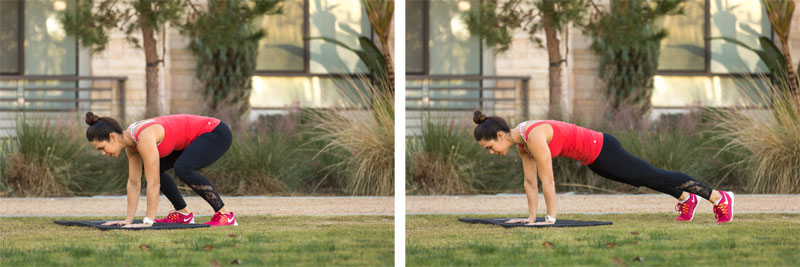
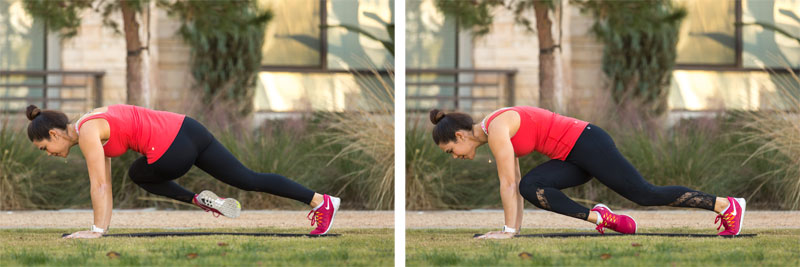
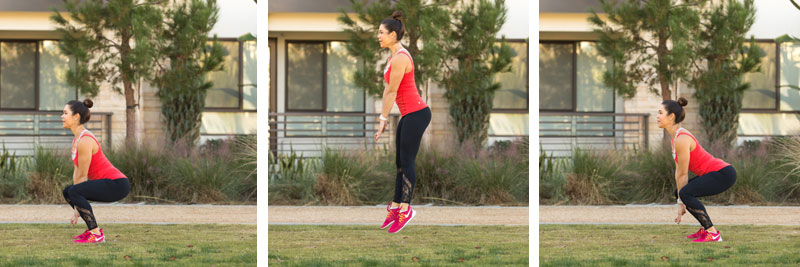
Start by performing each exercise for 15 seconds for the first round and then increase the time by 15 seconds for each subsequent round (i.e., 30, 45 and 60 seconds); rest for one minute between each round. You can complete this challenge in just 24 minutes, but you can extend your workout by completing three additional rounds in reverse order (of 45, 30 and 15 seconds, respectively) for a total of 39 minutes. Finish up with a cool-down and some stretches and you’re done!
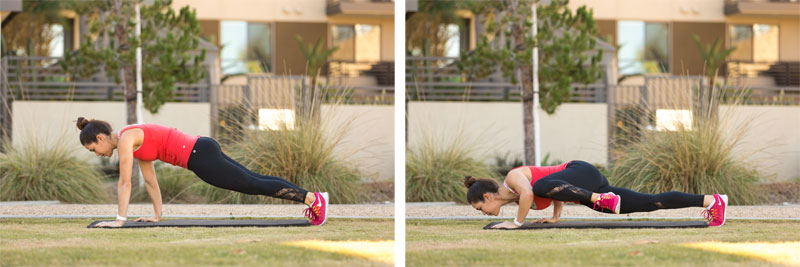
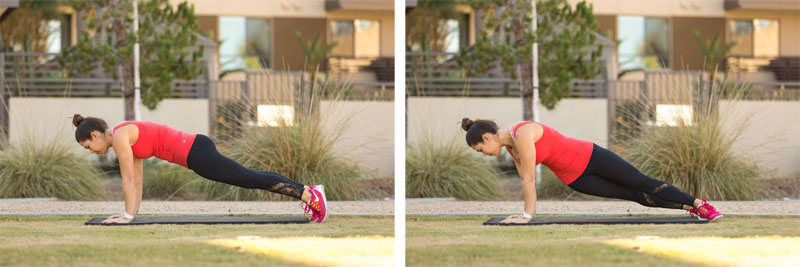
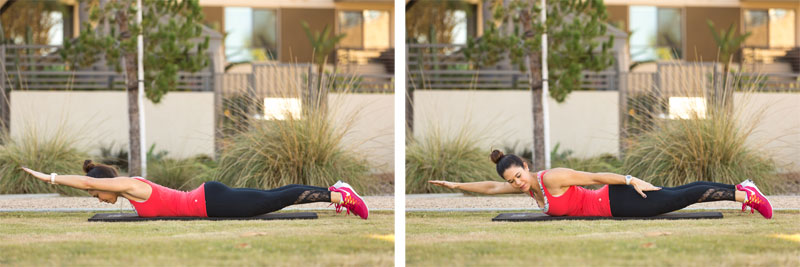
Superman Twists


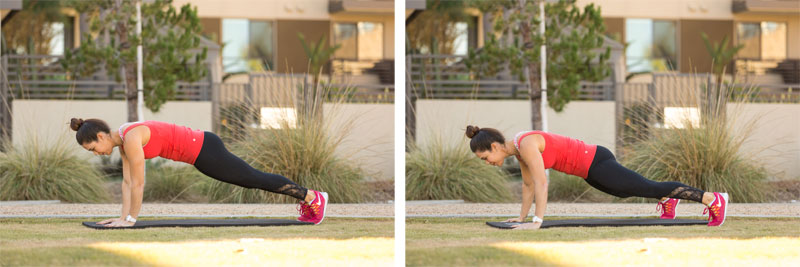
Staggered Spiderman Push-ups
Plank Sways
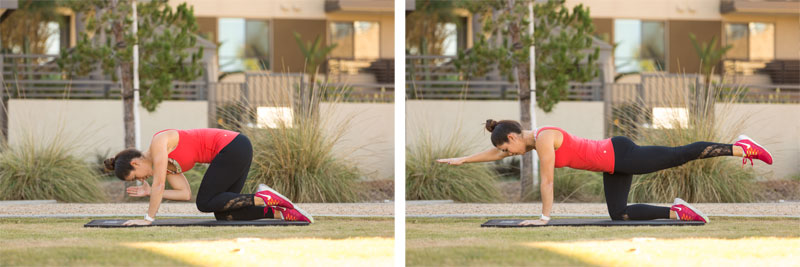
Bird Dog
Plank Jacks
Half Burpees
Mountain Climber Twists
Frog Hop Squats
For more workout ideas and exercises, check out ACE’s Fit Life page or contact an ACE Certified Trainer in your area.
Mollie MartinMOLLIE MARTINContributor
Mollie is a Study Assistance Consultant at the American Council on Exercise who holds a BS in Psychology. She is an ACE Certified Personal Trainer, Medical Exercise Specialist, Group Fitness Instructor, Health Coach, Sports Conditioning Specialist, Behavior Change Specialist and has her CSCS through the NSCA. Mollie is also a boot camp instructor, rugby player, fitness coach and health enthusiast. Mollie moved to San Diego from the Midwest in 2012 to pursue her passion of playing rugby and to be able to participate in outdoor fitness year-round.

Monday, December 26, 2016

We all need this one dish for Xmas

So that we don't feel awfully guilty haha =)

So xmas there was an invite as well we were asked to bring a dish so I couldn't think of anything (as usual I didn't want to make something 'unhealthy' so salad was on my mind.

of course I didn't just want to buy mix leaves and dressing (that would be embarrassing plus I looked 'lazy'). My favourite looking back was all time broccoli salad which needed to be made the night before and it does take a bit of effort if done from scratch.

 photo IMG_20161224_132452_zpsi19hut4v.jpg

 photo IMG_20161224_132457_zps2zul54su.jpg

 photo IMG_20161224_132503_zpsvvouffob.jpg

I knew a vegetable like this would fair well with sourish and salty condiments plus a dressing similar but on a sweeter end to fuse with the condiments.


This was perfect.

 photo IMG_20161225_074533_zpsy0zujycl.jpg

 photo IMG_20161225_075157_zpseh49knvd.jpg

I assembled everything together on the day itself just coz it was Christmas day and we were going to be out the whole day. This salad was for dinner.


Courtesy from food.com


Monday, December 19, 2016

Health Hacks for the Holidays

A little tip to staying sane over the holidays :)

Stay safe, eat well, sleep well and be merry! Coz that's what holidays are all about weeeeeeeeeeeeeee


Here we go again. It’s that time of year where people start dragging out the same tired, worn-out clichés about “the holidays.”
As a health and fitness leader, you want to avoid being a cliché, too. You know who I’m talking about—the trainers who talk about working off the drinks and doughnuts and putting people through tough workouts to punish them for the sins of eating. These flawed approaches create the wrong concept of exercise in people.
If we want people to think differently about eating and exercise, we must be different. To help you help others successfully navigate the holidays, here are some helpful health hacks for the holidays. Use these with your clients and students to help them sail through the holidays while maintaining fitness, feeling positive, and starting the new year with energy and enthusiasm.
1. Define your treat days. Plan your treats on the actual holidays only—Thanksgiving, Christmas Eve or Day, New Year’s Eve, etc., or other noteworthy days like the office or church holiday party. This way, you have a game plan for a limited number of pre-determined days where you’ll allow yourself to enjoy some favored treats, and you’ll avoid the often random and endless parade of junk food that finds its way in front of you during the holidays.
define your treats
2. Define your treats. Create a list of your favorite/cherished holiday treats (no more than three) and commit to only having those during the holidays. It can be a favorite pie that a family member makes during the holidays, a special dessert that you enjoy at this time of year, or the occasional seasonal treat such as a peppermint latte. Make a list of your favorites and stick to those. And remember, a treat is an occasional thing—not an everyday thing. Having a peppermint latte is dessert, not your morning coffee.
3. It's the holi-DAYS, not the holi-MONTHS. Starting with Halloween, it seems that we often treat all of November and December as if there are no health rules. We eat and drink whatever sugary or alcoholic beverages come out way and skip workouts because “Hey, it’s the holidays, and you’ve got to celebrate.” With this perspective, it’s actually two full months—one-sixth of our entire year—that we spend derailing health with poor choices because we have to “live a little.” It’s essentially an extended sabbatical from sensible choices, and that’s too long if we want to be healthy.
move with a smile
4. Move with a smile. It can be harder to get full workouts in with travel schedules and visiting relatives. Shift the focus to doing what you can rather than what you are unable to do. Pick an activity (not exercise) that:
  • Puts a smile on your face and in your heart and/or
  • You are doing with loved ones, friends, etc.
This might sound corny, but it works. Get moving doing something you love with people you love. The positive effect on mood and mindset is almost magical. Moving while doing something fun with the important people in your life does more for you than just moving or just spending time with loved ones. The combination strengthens connections between people while enhancing the health of each individual.
5. Guarantee your workouts. Make your exercise commitment small enough so that there is no way you can’t fit it in. The busyness of the holidays often means you may not have time for your full workout, but fortunately even abbreviated workouts offer great benefits. Whatever you do has benefit so make sure you do something.Here are some ideas for you to give your clients when they are short on time:
  • Try a mini-routine of four or five of your favorite exercises and do each as a circuit for five to 10 minutes continuously.
  • If you don’t have any favorite exercises or simply want something to try, try this routine. Repeat the following three exercises as a circuit two or three times.
    1. Table-top Hip Bridge (video) (10 reps)
    2. Squat with Alternating Floor Tap – Stand with feet slightly wider than usual for a squat. Squat while reaching down with your right hand to touch the floor at the bottom of the movement. Return to standing and tap with the left hand on the next rep (20 reps, alternating hands each time)
    3. Plank Side Walk In (This is the second of the three exercises shown in this video) (10 reps, alternating sides each time)
adjust your weather mindset
6. Adjust your weather mindset. The hardest part of winter isn’t the cold; it’s all the complaining. That’s the truly endless part of winter. If you live in the upper half of North America, it’s going to be cold in the winter. This isn’t a surprise, so accept it. Find things to appreciate and be grateful for (clean, crisp air; uncrowded hiking trails, winter activities like ice skating, skiing, snowboarding and snowball fights; making snowmen and snow angels; helping your elderly neighbor shovel out, etc.) and shift your mindset to stop allowing yourself to suffer so much. Suffering is a choice. Cold weather is not.
Many people I've coached over the years experience significant anxiety about the approach of the holidays and the seemingly uncontrollable forces that propel them away from health. Applying the strategies that make the most sense for each of your clients’ situations will help ensure this never happens again. You will lead people to a different perspective, which, in turn, will lead to a different health outcome during the holidays. There is nothing more wonderful than seeing people learn to choose wisely at this time of year and then flowing right into a new year feeling great. And they will not forget the role you played in creating this new perspective.

Tuesday, November 15, 2016

Why your Diet is Causing Constipation

Oh yes, I'm still going through the high's and low's of this. Often I fall back to Alpine tea, which is a natural form of laxative but a naturalpath told me not to depend on it as it will cause my bowel movement muscles to get lazy.

o.O

Tips below do help! I have yet to get myself around the 3-2-1 method (3 fruits, 2 litres of water and a serving of prunes)

Thanks ACE

It’s not a topic you probably want to talk about, but if you are constipated, making healthy changes to your diet and lifestyle can help get things moving again.

IDENTIFYING THE SOURCE OF THE PROBLEM

Constipation is generally defined as having fewer than three bowel movements per week. While it can be caused by something serious such as a bowel obstruction or colon or rectal cancer, other conditions such as diabetes, thyroid disorders and pregnancy can also cause constipation.
Some of the primary risk factors for and causes of constipation include:
  • Age (older adults are more likely to suffer from constipation)
  • Dehydration
  • Low-fiber diet
  • Sedentary lifestyle
  • Certain medications such as sedatives, narcotics or certain blood pressure-lowering drugs

FIBER AND FLUID FOR THE WIN

Fiber and Fluid for the Win
Making lifestyle changes such as eating more fiber, drinking more water and moving more can help alleviate constipation. Most people should start with these three recommendations before seeking other interventions.
When it comes to fiber, aim to eat 25-35 grams per day. The typical American consumes about 12-15 grams of fiber per day, so most of us would benefit from more roughage in our diets. Go slow as you consume more fiber, adding a few more grams per day into your meal plan.
Here are some tips for eating more fiber:
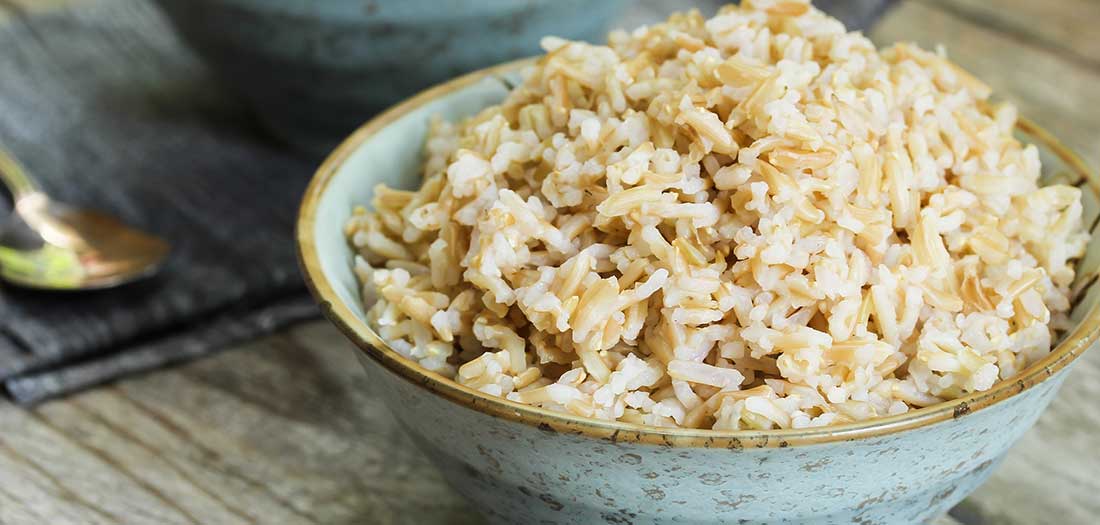
  • Choose brown instead of white rice.
  • Add dried or canned beans to salads, soups and casseroles.
  • Swap juice and canned fruits and vegetables for fresh ones with the skins left on.
  • Bake with whole-wheat flour or other whole grains.
  • Look for the words 100% whole wheat, rye, oats or bran as the first or second ingredient in your bread foods.
When you increase your fiber, you also need to increase your water intake. Aim to drink at least eight cups per day, but you may need more with additional fiber intake. Fluid allows your body to process all of that fiber without gastrointestinal discomfort.

THE 3-2-1 RULE

For people complaining of constipation, the 3-2-1 rule can help. Each day aim to eat three pieces of fruit, drink 2 liters of water and include one serving of either bran or prunes. Bran and prunes are especially helpful in alleviating constipation. Bran helps increase fecal bulk and prunes contain a compound that speeds their transit through your gut.

MOBILITY FOR MOTILITY

Mobility for Motility
Sitting down for much of the day can contribute to constipation. Physical activity gets things moving and can help promote more regular bowel movements. Make a point to be active for 30-60 minutes per day.

Friday, November 4, 2016

How to help your body to Manage Cravings (5 tips)

I liked how articles would explain the science behind our feelings. And here is one: Cause of cravings and what we can do to ensure we don't overload the system.

Courtesy from Les Mills


13
The desire for food is like a swinging pendulum. 
Several times a day the pendulum swings between 
the extremes of hunger on one side and fullness on 
the other. Somewhere in middle of this arch is when 
we care little for food. This passing phase is known 
as satiety – a phase we all aim to make a little less 
fleeting.

The extremes of hunger and fullness are largely controlled by the communications between the brain (the nervous system nestled in your skull) and your ‘second brain’ (where a surprising amount of nerves and grey matter wrap in and around the digestive organs). Known as your enteric nervous system (ENS), this ‘second brain’ shares many of the same characteristics as the brain. There are billions of nerve connections and specialist regions producing their own array of neurotransmitters. However, unlike the brain, these nerves are focused on ensuring you regularly eat and that you digest what you have eaten.
The brain and ENS share many connections, so it’s not surprising that mood and stresses have a powerful impact on gut sensations and appetite control.
What your ENS does to help control hunger
As your stomach shrinks between meals, under the control of the ENS, ghrelin is released. Ghrelin is one of a number of recently discovered hormones produced by the gut that triggers feelings of either hunger or fullness. In the case of ghrelin, the rising levels in the blood trigger the nagging and incessant feelings of hunger. Once food is eaten, the levels of ghrelin in the blood fall rapidly and stay down for the next few hours, before slowing creeping up again.
Like someone constantly knocking on the door, the need to eat gradually passes from mild interruption to an overwhelming demand. It’s at the extreme end of this cycle that we will eat almost anything, with greedy need. Yet very soon this passes to fullness and potentially pain. Again the ENS triggers the sensation of fullness by firstly responding to the stretch sensors that are located on the stomach. These are powerful brakes trying to limit more food being eaten. Without these brakes there is the risk that the rest of the digestive system will be overloaded with excess food to digest. To avoid swamping the system the ENS emits pain signals and acts as a powerful brake on the rate at which the stomach empties into the small intestine. Even to the point of bursting, the ENS only allows the stomach to release a slow trickle of food for further digestion.
In the small intestine, the ENS controls the release of digestive hormones, and an entire lexicon of appetite regulation hormones – these include glucagon-like peptide (GLP), cholecystokinin (CCK), pancreatic polypeptide (PPP) and peptide YY (PYY). Each has a subtle role in helping communicate to the body and brain, not only how much has been eaten but how much protein, fat and carbohydrate was present in the meal. Protein rich meals are more potent stimulators and as a result contribute to longer lasting feelings of fullness and satiety.
The complexities of many nerves and hormones controlling hunger, appetite and satiety are not surprising when you consider how vital food is for survival. This explains why hunger signals are so powerful. Starvation has been a major factor that has shaped human evolution. A stomach-ache from overeating is then just a minor passing inconvenience in comparison to the insistent and overwhelming need to eat for the hungry. 
FIVE WELL-ESTABLISHED STRATEGIES FOR STOPPING FOOD CRAVINGS
  1. Eat before you become ravenous
It’s easy to try and skip meals when you’re frantically busy and overwhelmed. It’s only a matter of time before the powerful forces of the gut-brain axis will have you freewheeling towards food – lots of food!
  1. Slow down the rate you eat (and drink water)
A meal consumed at a leisurely pace allows your ENS to manage and control the flow of appetite regulating hormones to maximal benefit. A slow and sustained release of gut hormones will have you feeling fuller and hunger-free for hours. Water has the same effect, by providing bulk and diluting the nutrients in the digestive tract.  
  1. Avoid empty liquid calories
Sugar-sweetened beverages do little to quench hunger or bring on the feelings of fullness. They are just empty calories that have to go somewhere! Alcohol has an even more perverse effect. It stimulates hunger and provides extra calories, one sip at a time. 
  1. Choose healthy proteins
Protein rich foods including beans, legumes, pulses and grains are a glorious blend of bulk and protein. Other healthy protein options including seafood, low fat dairy and eggs also provide sustained appetite controlling benefits.
  1. Make it flavorsome
Herbs and spices have complex and unique actions on appetite regulating hormones. From the fire of chillies to the bite of cinnamon, many herbs and spices have the ability to not only reduce the amount you eat at a meal, buts also make you feel fuller for longer.
Bon appetit.
Professor David Cameron-Smith
Professor David Cameron-Smith is a regular Fit Planet contributor. A transplanted Australian, he obtained a PhD in nutritional biochemistry from Deakin University, and undertook postdoctoral training at the Royal Prince Alfred Hospital, Sydney. His research interests include the importance of nutrition in the maintenance of optimal health in an ageing population, and the impact of nutrition in regulating the function of muscles.
If you want more health and fitness inspiration simply sign up to Fit Planet and get the freshest insights and advice straight to your inbox.   
Photo credit: Dan Gold