Want Quick Happy tips? Head over to Marc and Angels Hack

Practical Tips for Productive Living - Wonderful Quick and effective reading articles around the wellbeing, happiness and positiveness in bullet points numbers. I personally use it for easy reference

Want quick inspiration? Inspiration Peak is the place to go!

Check out and subscribe to Inspiration Peak in my Fav Websites for everyday quotes. Works a charm every single day. You're more than welcome to suggest a quote too!

Mind, Body, Green - Ultimate Wellness articles

I love their articles for it is written by various authors coming from wellbeing, yoga, holistic nutrition background that brings you closer to nature and serenity...

Lifehacker - Tips, tricks, and downloads for getting things done

Slightly drawn towards IT tips but they do also have tips about anything and everything you need under the sun, including tips for baking and cleaning! Check them out

Sunday, January 4, 2015

7 Things Parents Should Tell Their Kids Every Day

Super useful~ as an alternative to 'I love you'

Here is the summary:

  1. I believe in you
  2. Never give up
  3. Practice is how we learn
  4. Every expert started out as a beginner - just like you
  5. Failure / Fullure is not an option
  6. You gotta learn from every oopsie and ouchie
  7. You are saved and love
Thanks mindbodygreen!


You May Also Enjoy
One of the most common refrains parents tell me is something along the lines of "I don't want my child to feel X." You can fill in the blank. I don't want my child to feel: left out, rejected, like a  Read 
There are many ways to say “I love you” to your children, without actually uttering those three small-but-mighty words. Below are my seven favorite alternatives, which also double-duty as “Empowering Life Philosophies” for raising kids who feel resilient — kids who feel deep inside themselves that they have what it takes to bounce back from life’s assorted (and sordid!) challenges.
After all, let’s face it. No matter how hard we all try to travel a bump-free path tohappiness, life will always present its share of surprise potholes.
I don't literally mean to literally say each one of these 7 things every single day. Switch 'em up. Sprinkle them into your day.
1. “I believe in you.”
I've told my 3-year-old son, Ari, “I believe in you” so frequently, that he’s started to boomerang these words right back at me.
Funny example: The other day I was ransacking our apartment for my keys. I collapsed on the sofa, frustrated because I couldn’t find them. Suddenly I felt a tug, tug, tug on my yoga pants. It was Ari.
“Mommy,” he says, “I know you can find your keys. I believe in you.”
His words were just the booster shot of adrenaline I needed to stand up and try pulling the sofa away from the wall for a quick peek behind it. Eureka! I found my lost keys!
Yep! I greatly believe in the propulsion power of “I believe in you!”
2. “Never give up.”
Actually, when I say these words to my son, I say them three times in a row, in a silly, exaggerated, Winston-Churchill-type voice: “Never give up! Never give up! Never give up!”
This makes Ari giggle. And laughter is a great stress reliever, which continues to move him forward.
Recently, however, I realized these words need an important addendum. My son and I were putting together a Spiderman puzzle. Ari kept trying to squeeze the wrong puzzle piece into an empty puzzle space — while repeating: “Never give up! Never give up! Never give up!”
I corrected him by saying: “Never give up! Never give up! Never give up! Unless of course you’re doing something which might be wrong — then you need to stop, think and come up with a new strategy!”
“A new strategy?” he asked.
“Yes,” I said, “If you keep doing what you’re doing, you’ll keep getting what you’re getting. If nothing changes, nothing changes. So … you need to look for a new way of doing it, a new strategy, to get new results.”
Ari now recognizes the importance of never giving up, while also being open to seeking new strategies.
3. “Practice is how we learn.”
This phrase reminds Ari not to be upset at himself for slip-ups and downfalls. I like to say this not only during a challenging activity, but also before, as a warmly worded warm up.
4. "Every expert started out as a beginner — just like you."
I feel it’s essential to remind Ari that people who are awesome at something didn’t start off awesome.
I want my son to grow up knowing that it’s OK to make mistakes. It’s OK to fail. It’s OK to struggle. What’s not OK is to think that mistakes, failure and struggle are permanent states of being! They’re simply a bridge you need to keep traveling across to get yourself to “The Land of Awesome.” I want my son to grow up knowing that persistence, patience and effort are all far more important than perfection.
5. “Failure is not an option.
”I received this mantra via one of Ari’s talking ninja toys. When I first heard the toy utter this phrase, I said: “OOOooooooh I love this toy! Failure is not an option! That’s a good one!”
Ari and I then talked a bit about what this phrase means, things like: keep on trying, learn from everything, don't view it as "failure" but as "fullure" — "full" of lessons and insights to learn so you can try again with a new strategy and lots. So failure is never an option. One’s options are: learning, growing, letting it go, loving oneself for trying, and trying again!
Now whenever Ari is having trouble doing something, he’ll Ninja-Up and announce: “Failure is not an option!” Thanks to this phrase, Ari has become better and better at learning to read books!
6. “You gotta learn from every oopsy and ouchie.”
Each time Ari spills something, breaks something, drops something, kicks something, hurts something — I repeat for him this same little verbal ditty: “You gotta learn from every oopsy and ouchie.” I then ask him to specifically tell me what he learned from whatever the oopsy or ouchie might be — and we talk it through.
I let him know we all make oopsies and ouchies. We just have to try not to make the same oopsy or ouchie more than once.
7. “You are safe and loved.”
I recently added this phrase into my “Resiliency Words Tool Kit” after doing a hypnosis session with my friend. She was trying to put me into a relaxed emotional state. Her strategy? She asked me to remember a time in my childhood when I felt safe and loved. Hoo boy! As soon as she requested this, I tensed up instead of calming down! I couldn’t remember a clear, definitive time in my childhood where I felt safe and loved.
Afterward I thought about how important it is to raise kids to feel safe and loved. It bolsters their self-esteem and encourages courage.
I’ve now added the words “You are safe and loved!” into my goodnight ritual for my son. I whisper these words softly in his ear before he drifts off to sleep. “You are safe and loved.” I truly hope this quiet whisper creates a loud, infinite echo which lasts him long into adulthood.
Photo Credit: Shutterstock.com
Saturday, January 3, 2015

Are you raising nice kids? A Harvard psychologist gives 5 ways to raise them to be kind

Richard Weissbourd, a Harvard psychologist with the graduate school of education, and the Making Caring Common Project have come up with recommendations about how to raise children to become caring, respectful and responsible adults. (The Washington Post)


Earlier this year, I wrote about teaching empathy, and whether you are a parent who does so. The idea behind it is from Richard Weissbourd, a Harvard psychologist with the graduate school of education, who runs theMaking Caring Common project, aimed to help teach kids to be kind.
I know, you’d think they are or that parents are teaching that themselves, right? Not so, according to a new study released by the group. (Chat with Weissbourd here.)
About 80 percent of the youth in the study said their parents were more concerned with their achievement or happiness than whether they cared for others. The interviewees were also three times more likely to agree that “My parents are prouder if I get good grades in my classes than if I’m a caring community member in class and school.”
Weissbourd and his cohorts have come up with recommendations about how to raise children to become caring, respectful and responsible adults. Why is this important? Because if we want our children to be moral people, we have to, well, raise them that way.
“Children are not born simply good or bad and we should never give up on them. They need adults who will help them become caring, respectful, and responsible for their communities at every stage of their childhood,” the researchers write.
The five strategies to raise moral, caring children, according to Making Caring Common:
1. Make caring for others a priority
Why? Parents tend to prioritize their children’s happiness and achievements over their children’s concern for others. But children need to learn to balance their needs with the needs of others, whether it’s passing the ball to a teammate or deciding to stand up for friend who is being bullied.
How? Children need to hear from parents that caring for others is a top priority. A big part of that is holding children to high ethical expectations, such as honoring their commitments, even if it makes them unhappy. For example, before kids quit a sports team, band, or a friendship, we should ask them to consider their obligations to the group or the friend and encourage them to work out problems before quitting.
Try this
• Instead of saying to your kids: “The most important thing is that you’re happy,” say “The most important thing is that you’re kind.”
• Make sure that your older children always address others respectfully, even when they’re tired, distracted, or angry.
• Emphasize caring when you interact with other key adults in your children’s lives. For example, ask teachers whether your children are good community members at school.
2. Provide opportunities for children to practice caring and gratitude
Why? It’s never too late to become a good person, but it won’t happen on its own. Children need to practice caring for others and expressing gratitude for those who care for them and contribute to others’ lives. Studies show that people who are in the habit of expressing gratitude are more likely to be helpful, generous, compassionate, and forgiving—and they’re also more likely to be happy and healthy.
How? Learning to be caring is like learning to play a sport or an instrument. Daily repetition—whether it’s a helping a friend with homework, pitching in around the house, or having a classroom job—make caring second nature and develop and hone youth’s caregiving capacities. Learning gratitude similarly involves regularly practicing it.
Try this
• Don’t reward your child for every act of helpfulness, such as clearing the dinner table. We should expect our kids to help around the house, with siblings, and with neighbors and only reward uncommon acts of kindness.
• Talk to your child about caring and uncaring acts they see on television and about acts of justice and injustice they might witness or hear about in the news.
• Make gratitude a daily ritual at dinnertime, bedtime, in the car, or on the subway. Express thanks for those who contribute to us and others in large and small ways.
3. Expand your child’s circle of concern.
Why? Almost all children care about a small circle of their families and friends. Our challenge is help our children learn to care about someone outside that circle, such as the new kid in class, someone who doesn’t speak their language, the school custodian, or someone who lives in a distant country.
How? Children need to learn to zoom in, by listening closely and attending to those in their immediate circle, and to zoom out, by taking in the big picture and considering the many perspectives of the people they interact with daily, including those who are vulnerable. They also need to consider how their
decisions, such as quitting a sports team or a band, can ripple out and harm various members of their communities. Especially in our more global world, children need to develop concern for people who live in very different cultures and communities than their own.
Try this
• Make sure your children are friendly and grateful with all the people in their daily lives, such as a bus driver or a waitress.
• Encourage children to care for those who are vulnerable. Give children some simple ideas for stepping into the “caring and courage zone,” like comforting a classmate who was teased.
• Use a newspaper or TV story to encourage your child to think about hardships faced by children in another country.
4. Be a strong moral role model and mentor.
Why? Children learn ethical values by watching the actions of adults they respect. They also learn values by thinking through ethical dilemmas with adults, e.g. “Should I invite a new neighbor to my birthday party when my best friend doesn’t like her?”
How? Being a moral role model and mentor means that we need to practice honesty, fairness, and caring ourselves. But it doesn’t mean being perfect all the time. For our children to respect and trust us, we need to acknowledge our mistakes and flaws. We also need to respect children’s thinking and listen
to their perspectives, demonstrating to them how we want them to engage others.
Try this:
• Model caring for others by doing community service at least once a month. Even better, do this service with your child.
• Give your child an ethical dilemma at dinner or ask your child about dilemmas they’ve faced.
5. Guide children in managing destructive feelings
Why? Often the ability to care for others is overwhelmed by anger, shame, envy, or other negative feelings.
How? We need to teach children that all feelings are okay, but some ways of dealing with them are not helpful. Children need our help learning to cope with these feelings in productive ways.
Try this
Here’s a simple way to teach your kids to calm down: ask your child to stop, take a deep breath through the nose and exhale through the mouth, and count to five. Practice when your child is calm. Then, when you see her getting upset, remind her about the steps and do them with her. After a while she’ll start to do it on her own so that she can express her feelings in a helpful and appropriate way.

Tuesday, December 23, 2014

When Intuitive Eating Is Counterintuitive: How to Help Clients Learn to Listen to Their Bodies

"Let’s be honest: People who struggle with their weight likely do not have the best understanding of their bodies’ needs" <------- totally agree with this phrase.

I have come from many experiences of being a picky eater, an athlete, a post athlete, from starving myself to stuffing myself. Throughout this journey, it has taught me the lessons of 'listening' to my body. It's one of life's most simplicity, yet the hardest to grasp when there is just so many distraction these days.

Here is a reminder from one voice that may be able to guide you through :)


By Daniel J. Green

“Intuitive eating” is one of the hottest catchphrases in the fitness industry, the focus of countless blog posts and Facebook statuses. Stated simply, intuitive eating involves developing a healthy relationship with food, getting in tune with the cues the body provides and ending the cycle of dieting, failing and dieting again. A superficial understanding of the concept may lead some people who are overweight or have obesity to think, “If only I could learn to listen to my body, maybe I could finally lose some weight.”
Mind and Body
The mind-body connection, or mindfulness, has become a staple of the fitness industry over the past decade, and rightfully so. There is an indisputable connection between the mind and body when it comes to fitness, weight loss and performance.
That said, intuitive eating actually requires the individual to be able to separate mind from body in certain circumstances. Consider a client who says she has a sweet tooth, with powerful cravings that come each evening after dinner. This is an example of the mind providing a cue that did not originate with the needs of the body. This, of course, doesn’t make it any easier to overcome in the moment, but perhaps learning to separate the body’s needs from the mind’s habits can facilitate better decision-making.
Teach your clients to pause before heeding a craving to consider the source of the call to eat. A desire for a Greek yogurt in late afternoon may be the body asking for some protein to provide an energy boost. On the other hand, a craving for sweets may be the mind seeking comfort during times of stress in the form of a food it knows brings enjoyment. If a client can identify the source of the craving, perhaps he or she can develop a plan to provide alternative, healthier forms of stress relief.
But let’s be honest: People who struggle with their weight likely do not have the best understanding of their bodies’ needs. Individuals with obesity typically are not overeating because they’re hungry, but because they are allowing emotional eating and inactivity to become the norm. Therefore, diving into an intuitive eating program may not be the best option for someone with little understanding of the basics. In other words, intuitive eating doesn’t work if your intuition stinks.

As a health and fitness professional, you will undoubtedly field questions about intuitive eating from curious clients, so you should be prepared to teach them what this tool entails and where it fits into a holistic weight-loss program. The trouble is, despite its apparent simplicity, intuitive eating is far from an entry-level concept. Individuals frustrated by previous weight-loss attempts are understandably quick to latch onto anything that promises results, but any weight-loss program must begin with what Pamela M. Nisevich Bede, M.S., R.D., C.S.S.D., nutrition consultant with Swim, Bike, Run, Eat!, L.L.C., calls “Nutrition 101.”

The Role of Calorie Counting
In many ways, calorie counting is the antithesis of intuitive eating. The practice of counting calories has become increasingly widespread with the proliferation of wearable gadgets that, among many other features, tell the wearer how many calories he or she is burning each day and during certain activities. Couple that with apps that track caloric intake and you have people all over the world hyperaware of their caloric balance.
The downside of calorie counting, according to Samantha Pollack, an Asheville-based holistic health coach, personal trainer and owner/operator of www.insiderwellness.com, is that people start thinking of exercise as a means to “gain calories” rather than as a healthy activity that they enjoy. By turning a hike or bike ride into a number to be entered into an equation, we are minimizing the importance of exercising for enjoyment—which should be the primary focus for any new exerciser. Worse yet, says Pollack, “Some clients will perform workouts they are not equipped for simply because they will burn more calories, despite the potential for injury or overtraining.”

Consider a client who is overweight and has begun a walking program in recent weeks. He has been struggling to stay within the calorie allotment provided by his phone app, so he decides to incorporate some jogging into his routine as a way to “earn more calories” to eat later in the day. While this may indeed increase the number of calories he burns, he also may be setting himself for excessive soreness or even injury, which could derail his efforts entirely.

Another potential downside of calorie counting is that it actually runs counter to the notion of listening to the needs of the body. Nearly everyone who has counted calories in an effort to shed pounds has found themselves pacing back and forth in the kitchen, opening cabinets and staring blankly into the refrigerator, trying to find something tasty to eat when they have a set number calories left at the end of a long day. Genuine hunger is then in a battle with a number, leading to tremendous frustration. And, as Pollack points out, “calorie counting creates a scenario where the battle begins again each morning.” This is why true lifestyle change—which is a primary outcome of intuitive eating—is so essential.

All of that said, both Pollack and Nisevich Bede agree that calorie counting can play an important role as an educational tool—as part of your Nutrition 101 teaching. While counting calories can be a very limiting practice, explains Pollack, it can be used as an exploratory tool to help clients understand what—and how much—they’re really eating. “Many people are really in the dark about what they consume each day,” says Pollack, “and calorie counting can be a valuable learning tool.” Nisevich Bede agrees: “Counting one’s calories allows clients to understand how many calories are in foods they’re eating on a regular basis, as well as substitutions they can make to improve their nutrition.”

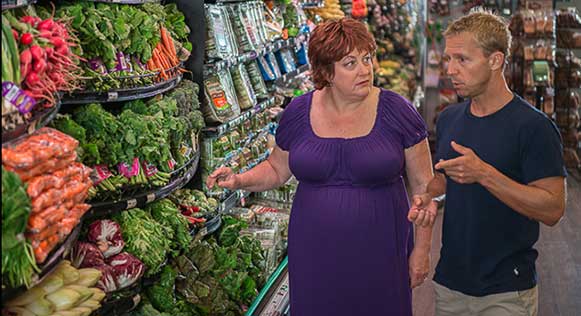
This educational process can be the starting point that eventually leads to intuitive eating. Simple, practical tips like “add more color to your diet,” coupled with a newfound grasp of caloric content, can help “beginners” get started on the path to long-term success.
Am I Hungry?
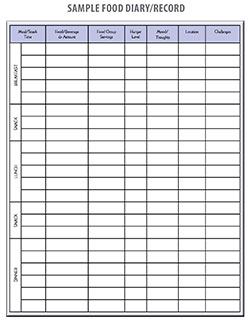
That simple question—am I hungry?—lies at the heart of intuitive eating. Pollack explains intuitive eating as “eating according to responses from the body.” Cravings can be indications that something is out of balance, but that imbalance is often driven by the mind rather than the body (see sidebar). For that reason, a food journal can be extremely valuable for clients learning to get in touch with the reasons behind their eating habits (Figure 1). By putting their mood and thoughts into words each time they eat, clients will often find patterns that provide insight into subconscious habits that are derailing efforts to eat intuitively. Eating when you’re not hungry is the first sign that you’ve lost the connection with your body’s cues. 
 
Obeying these cues requires a high level of body awareness, which is often lacking among clients who are overweight, who tend to beat themselves up over every lapse in judgment. Pollack recommends that clients counter negative self-talk by looking at their body as if it belongs to a friend. “Most people would never talk to a friend the way they think about themselves,” Pollack explains. Many obese clients will say something like, “I’m so fat. And now I just blew my diet for the day”—but they would never talk to a friend or loved one that same way. Self-acceptance can often be the first step to body awareness: “I shouldn’t have eaten that, but that’s O.K. Lesson learned. I just have to get back on track right away.” Doesn’t that sound more like the type of advice you’d give a friend?
The folks at www.intuitiveeating.com, who literally wrote the book on the topic, provide these 10 principles of intuitive eating, many of which were alluded to earlier:
  • Reject the diet mentality
  • Honor your hunger
  • Make peace with food
  • Challenge the food police
  • Respect your fullness
  • Discover the satisfaction factor
  • Honor your feelings without using food
  • Respect your body
  • Exercise—feel the difference
  • Honor your health—gentle nutrition
To simplify the concept of intuitive eating, Nisevich-Bede, who is also a contributor to the ACE Health Coach Manual, provides the following list of things that fitness professionals can teach their clients who are just getting started with intuitive eating to do each time they sit down to eat: Pause, reflect on what they’re about to eat and why, think about whether they’re making wise choices and, once they begin to actually eat, slow down and savor their food.
Intuitive eating is not a starting point for weight loss. Most clients who are overweight or have obesity will need to begin with some basic Nutrition 101 courses: counting calories, substituting healthier foods, completing food logs and using other entry-level tools that will eventually help them get in better touch with the needs of their bodies. While clients can certainly work toward true intuitive eating, the process is ongoing and life-long. That said, “Slow down and savor your food” is always excellent advice.
__________________________________________________________________________
Daniel J. Green is an editorial consultant and freelance writer based in Asheville, N.C. In addition to his consulting work with organizations including the American Council on Exercise, International Association of Fire Fighters and Agriculture Future of America, Daniel has written feature articles for local publications in Western North Carolina (WNC), including WNC Parent and WNC Magazine.


Saturday, December 20, 2014

The important thing about yelling

is.........we try not to? ahahhahahahh easier said than done, *sigh*

Here is a reminder


2,423,050 views   |   39,291 shares
  • I cherish the notes I receive from my children — whether they are scribbled with a Sharpie on a yellow sticky note or written in perfect penmanship on lined paper. But the Mother’s Day poem I recently received from my 9-year-old daughter was especially meaningful. In fact, the first line of the poem caused my breath to catch as warm tears slid down my face.
    “The important thing about my mom is … she’s always there for me, even when I get in trouble.”
    You see, it hasn’t always been this way.
    In the midst of my highly distracted life, I started a new practice that was quite different from the way I behaved up until that point. I became a yeller. It wasn’t often, but it was extreme — like an overloaded balloon that suddenly pops and makes everyone in earshot startle with fear.
    So what was it about my then 3-year-old and 6-year-old children that caused me to lose it? Was it how she insisted on running off to get three more beaded necklaces and her favorite pink sunglasses when we were already late? Was it that she tried to pour her own cereal and dumped the entire box on the kitchen counter? Was it that she dropped and shattered my special glass angel on the hardwood floor after being told not to touch it? Was it that she fought sleep like a prizefighter when I needed peace and quiet the most? Was it that the two of them fought over ridiculous things like who would be first out of the car or who got the biggest dip of ice cream?
    Yes, it was those things — normal mishaps and typical kid issues and attitudes that irritated me to the point of losing control.
    That is not an easy sentence to write. Nor is this an easy time in my life to relive because truth be told, I hated myself in those moments. What had become of me that I needed to scream at two precious little people who I loved more than life?
    Let me tell you what had become of me.
    My distractions
    Excessive phone use, commitment overload, multiple page to-do lists, and the pursuit of perfection consumed me. And yelling at the people I loved was a direct result of the loss of control I was feeling in my life.
    Inevitably, I had to fall apart somewhere. So I fell apart behind closed doors in the company of the people who meant the most to me.
    Until one fateful day.
    My oldest daughter had gotten on a stool and was reaching for something in the pantry when she accidently dumped an entire bag of rice on the floor. As a million tiny grains pelleted the floor like rain, my child’s eyes welled up with tears. And that’s when I saw it — the fear in her eyes as she braced herself for her mother’s tirade.
    She’s scared of me, I thought with the most painful realization imaginable. My 6-year-old child is scared of my reaction to her innocent mistake.
    With deep sorrow, I realized that was not the mother I wanted my children to grow up with, nor was it how I wanted to live the rest of my life.
    Within a few weeks of that episode, I had my Breakdown-Breakthrough — my moment of painful awareness that propelled me on a Hands Free journey to let go of distraction and grasp what really mattered. That was two and a half years ago — two and half years of scaling back slowly on the excess and electronic distraction in my life … two and half years of releasing myself from the unachievable standard of perfection and societal pressure to “do it all.” As I let go of my internal and external distractions, the anger and stress pent up inside me slowly dissipated. With a lighten load, I was able to react to my children’s mistakes and wrongdoings in a more calm, compassionate, and reasonable manner.
    I said things like, “It’s just chocolate syrup. You can wipe it up, and the counter will be as good as new.”
    (Instead of expelling an exasperated sigh and an eye roll for good measure.)
    I offered to hold the broom while she swept up a sea of Cheerios that covered the floor.
    (Instead of standing over her with a look of disapproval and utter annoyance.)
    I helped her think through where she might have set down her glasses.
    (Instead of shaming her for being so irresponsible.)
    And in the moments when sheer exhaustion and incessant whining were about to get the best of me, I walked into the bathroom, shut the door, and gave myself a moment to exhale and remind myself they are children, and children make mistakes. Just like me.
    And over time, the fear that once flared in my children’s eyes when they were in trouble disappeared. And thank goodness, I became a haven in their times of trouble — instead of the enemy from which to run and hide.
    I am not sure I would have thought to write about this profound transformation had it not been for the incident that happened last Monday afternoon. In that moment, I got a taste of life overwhelmed and the urge to yell was on the tip of my tongue. I was nearing the final chapters of the book I am currently writing and my computer froze up. Suddenly the edits of three entire chapters disappeared in front of my eyes. I spent several minutes frantically trying to revert to the most recent version of the manuscript. When that failed to work, I consulted the time machine backup, only to find that it, too, had experienced an error. When I realized I would never recover the work I did on those three chapters, I wanted to cry — but even more so, I wanted to rage.
    But I couldn’t because it was time to pick up the children from school and take them to swim team practice. With great restraint, I calmly shut my laptop and reminded myself there could be much, much worse problems than re-writing these chapters. Then I told myself there was absolutely nothing I could do about this problem right now.
    When my children got in the car, they immediately knew something was wrong. “What’s wrong, Mama?” they asked in unison after taking one glimpse of my ashen face.
    I felt like yelling, “I lost three days' worth of work on my book!”
    I felt like hitting the steering wheel with my fist because sitting in the car was the last place I wanted to be in that moment. I wanted to go home and fix my book — not shuttle kids to swim team, wring out wet bathing suits, comb through tangled hair, make dinner, wash dishes, and do the nightly tuck in.
    But instead I calmly said, “I’m having a little trouble talking right now. I lost part of my book. And I don’t want to talk because I feel very frustrated.”
    “We’re sorry,” the oldest one said for the both of them. And then, as if they knew I needed space, they were quiet all the way to the pool. The children and I went about our day and although I was more quiet than usual, I didn’t yell and I tried my best to refrain from thinking about the book issue.
    Finally, the day was almost done. I had tucked my youngest child in bed and was lying beside my oldest daughter for nightly Talk Time.
    “Do you think you will get your chapters back?” my daughter asked quietly.
    And that’s when I started to cry – not so much about the three chapters, I knew they could be rewritten — my heartbreak was more of a release due to the exhaustion and frustration involved in writing and editing a book. I had been so close to the end. To have it suddenly ripped away was incredibly disappointing.
    To my surprise, my child reached out and stroked my hair softly. She said reassuring words like, “Computers can be so frustrating,” and “I could take a look at the time machine to see if I can fix the backup.” And then finally, “Mama, you can do this. You’re the best writer I know,” and “I’ll help you however I can.”
    In my time of “trouble,” there she was, a patient and compassionate encourager who wouldn’t think of kicking me when I was already down.
    My child would not have learned this empathetic response if I had remained a yeller. Because yelling shuts down the communication; it severs the bond; it causes people to separate — instead of come closer.
    “The important thing is … my mom is always there for me, even when I get in trouble,”
    My child wrote that about me, the woman who went through a difficult period that she’s not proud of, but she learned from. And in my daughter’s words, I see hope for others.
    The important thing is … it’s not too late to stop yelling.
    The important thing is … children forgive — especially if they see the person they love trying to change.
    The important thing is … life is too short to get upset over spilled cereal and misplaced shoes.
    The important thing is … no matter what happened yesterday, today is a new day.
    Today we can choose a peaceful response.
    And in doing so, we can teach our children that peace builds bridges — bridges that can carry us over in times of trouble

Thursday, December 18, 2014

Where Does Your Fat Go When You Lose Weight?

Such a straight forward answer using chemistry, I love it!

Photo credit: Elena Shashkina / Shutterstock.com
We talk a lot about dieting and burning off fat, but we actually have a lot of misconceptions about weight loss. Some people think fat is converted into energy or heat—a violation of the law of conservation of mass—while others think that the fat is somehow excreted or even converted to muscle. I was told early on that you can never lose your fat cells (adipose) once you gain them...they just shrink if you work it off.

Well, according to Andrew Brown from the University of New South Wales and Australian TV personality (slash former physicist) Ruben Meerman, when you lose weight, you exhale your fat. Their new calculations, based on existing knowledge about biochemistry, were published in the British Medical Journal this week.

“There is surprising ignorance and confusion about the metabolic process of weight loss,” Brown says in a news release. “The correct answer is that most of the mass is breathed out as carbon dioxide,” Meerman adds. “It goes into thin air.”

Excess carbs and proteins are converted into chemical compounds called triglycerides (which consist of carbon, hydrogen, and oxygen) and then stored in the lipid droplets of fat cells. To lose weight, you’re attempting to metabolize those triglycerides, and that means unlocking the carbon that’s stored in your fat cells.

Losing 10 kilograms of human fat requires the inhalation of 29 kilograms of oxygen, producing 28 kilograms of carbon dioxide and 11 kilograms of water. That’s the metabolic fate of fat.

Then the duo calculated the proportion of the mass stored in those 10 kilograms of fat that exits as carbon dioxide and as water when we lose weight. By tracing the pathway of those atoms out of the body, they found that 8.4 of those kilograms are exhaled as carbon dioxide. Turns out, our lungs are the primary excretory organ for weight loss. The remaining 1.6 kilograms becomes water, which is excreted in urine, feces, sweat, breath, tears, and other bodily fluids.

So, for this upcoming post-holiday season, should we all just exhale more to shed those extra pounds? No. Breathing more than required by a person’s metabolic rate leads to hyperventilation, followed by dizziness, palpitations, and loss of consciousness...

A letter to my pre-mom self

I'm not there yet :)


Oh, momma. I see you over there in the diaper aisle of Target, stuffing your face with popcorn, icee tucked carefully between your arm and baby bump. You’re staring at eight different kinds of baby wipes trying to make life-impacting decisions for your unborn child: scented vs. unscented, organic vs. non-organic, name brand vs. generic.
Your brow furrows as you glance over your shoulder at the array of other choices staring at you—diapers, diaper pails, diaper pail bags, diaper rash creams. All the products sit neatly lined up on the shelf, mocking you. Mocking all the moms.
“Pick me! Pick me!” they shout, trying to get your full attention in between bites of popcorn.
And what I really want to do is grab you by the shoulders and both yell and whisper sweetly at the same time: it doesn’t matter. None of that stuff matters. It doesn’t matter that you don’t have a clue what you’re doing or buying because I’m going to let you in on a little secret: nobody does.
Nobody knows what they’re doing bringing fresh new babies into the world. We’re all clueless and equally terrified of doing everything wrong. We’re all just here, caught up in this newfound all-consuming love, trying to figure it out one day at a time, one mistake at a time, one too-expensive Target trip at a time.
I see the worry on your face, the anxiety in your heart, the ridiculous things you’re googling. It’s okay, it’s part of the process. I know you’re scared that life will never be the same, and you’re right—it won’t be. It will be both better and harder than the same, a truth you won’t entirely understand until that squirmy seven pound baby is in your arms.
I am only two measly years ahead of you, but rest assured: I have learned more about motherhood in these past two years than I did in the 26 years leading up to that first positive pregnancy test. And while I have so much to tell you, gentle advice and encouragement to offer, I know that you will never fully comprehend any of this until that baby is here. Yet still, I cannot help myself….here is what I want you to know:
You will be different. You will see parts of yourself that are unrecognizable, brought only to the surface by the sheer fact that another human is suddenly dependent on you for everything. You will be anxious, you will worry, you will feel overprotective like you have never felt before. You will simultaneously need space and not need space because all you want to do is be alone and also never leave your baby with anyone else. You will uncover a plethora of mom-related judgements that were hiding in your heart all along, and one by one they will fall by the wayside as you realize just how hard and messy and glorious this calling of motherhood actually is. You will learn to love fiercely and wildly without expectations, and for the first time in your whole life, your heart will default to selflessness—a part of you that always existed but was buried deep down inside—waiting for this moment, this change, this baby, this occasion to rise. 
Your body will be different. Some parts will get bigger while other parts will shrink; it’s weird and miraculous and confusing most of the time. You will hate your body some days and love your body other days. Give yourself grace. When you’re having a hard time offering yourself grace, take a shower and blow dry your hair. Treat yourself to a new pair of jeans when you're ready to wear jeans again. Get the expensive kind (tell your husband I said it was okay). Remind yourself that your body grew and sustained a human, and that those faint stretch marks on your belly are the well-earned marks of a warrior. 
Your marriage will be different. You and your spouse will see each other with a whole new set of eyes: a brand new microscope on each others’ triumphs and failures. One of you will be “too carefree” and one of you will be “too careful”—you will learn to meet in the middle, eventually. You will trust each other like you’ve never trusted anyone before, and you will learn to love each other as parents, which is a different kind of love. Your date nights will be sparse. Your sex life will be slow. Be patient, be patient, be patient. You'll be tempted to keep score of everything: the number of times you get up in the middle of the night, the number of diapers you've changed, who did the dishes last, whose job is harder. Listen to me carefully, momma. Score-keeping has no place in your marriage. Throw that scorecard away. The best thing you can do for yourself and for each other is to say “thank you” and “I love you” every single day. Be grateful, be appreciative, offer each other grace upon grace upon grace. It is easier said than done, but trust me in this: you both need it now more than ever. 
Your house will be different. You will often feel overwhelmed by the mess, the piles of dishes, the sticky surfaces and crumbs. But one day there will be a trail of cheerios on the floor marking where your baby has been and what he has seen, and you'll realize that those cheerios make your house feel more like a home than any fresh flower arrangement ever could, and that epiphany will make you smile. One day your toddler will run down the hallway in his footy pajamas and you will want to capture that sound in a bottle for all of eternity because there is no better sound to wake up to (excluding the coffee maker). Your house will be messier, more chaotic, and less conducive to hosting company, but you will love it a hundred times more because it has never felt more like home.
Your whole life will be different. Every single day you will wake up with the responsibility of loving a child beyond measure. It will affect every decision you make, every thought you have, every fiber of your very existence. You will slowly learn to let go of control and expectations, a process you will practice every day for the rest of your life as a parent. You will start to see the world as a mom—you will see love and God and humanity through new eyes that will change you and mold you and make you more aware of how small you are and how big God is.
A void will be fulfilled that you didn’t even know existed. Can you remember the first time you saw a sunrise? The first time your toes felt sand? The first time you tasted chocolate? Probably not; you were too young to remember. Five minutes before those experiences happened you were just cruising right along, thinking life was great as is. But then, you saw that stunning orange sunrise and you felt that warm sand between your toes and you tasted that delicious piece of chocolate and you just knew. You knew life just became infinitely better in every way because you experienced magic. And motherhood is kind of like that, only a million times better.
So keep on shoppin, momma. You just dropped a piece of popcorn down your shirt but don’t worry, nobody noticed. And remember what I said about the baby wipes: that stuff doesn’t matter

Sunday, December 14, 2014

The Do's and Don'ts of Flexibility Training

First things first: Don't overlook on flexibility...

While research clearly indicates that joint range of motion is improved acutely and chronically following flexibility exercises, flexibility training continues to be one of the most overlooked aspects of most people’s fitness programs. With a growing focus on functional training to adequately prepare the body to perform optimally, not only when completing exercises in the gym but also when engaging in activities in everyday life, it’s imperative that proper levels of joint mobility be established to ensure quality movement.
While more studies are needed to definitively understand the effect of flexibility training plays in reducing the risk of injuries and minimizing delayed onset muscle soreness, based on the current available research there are some things we know that we should be doing—and not be doing—when it comes to this essential component of a well-rounded workout routine.
Do: Roll it out.
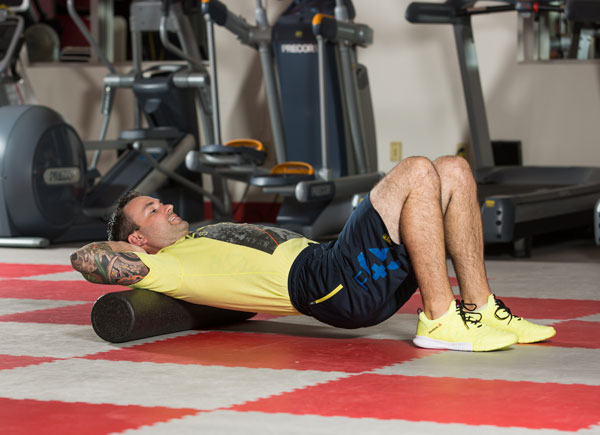
foam rolling
While most people think stretching is the only way to enhance flexibility, self-myofascial release to address tissue density is also effective and should be incorporated into your exercise experience. Beginning your warm-up by using tools such as a foam roller or tennis ball to decrease trigger points or “knots” within the muscles by applying pressure to commonly tight areas of the body can help to relieve tension and increase blood flow. In turn, this helps to enhance mobility and improve overall movement quality. Interestingly, self-myofascial release can also be incorporated into the cool-down to offer even more flexibility-related benefits, as first focusing on tissue density will then help to then address tissue length through the completion of static stretching.
Don’t: Go in completely cold.
jump rope
As noted in the current exercise guidelines, research suggests that flexibility exercise is most effective when the muscles are warm. Therefore, engaging in light aerobic activity—such as jogging, jumping rope or briskly walking—to get the blood flowing to the tissues can prove beneficial before performing static stretches.
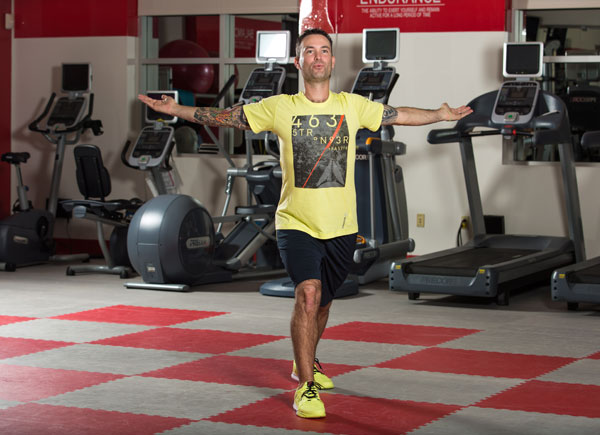
Do: Get mobile.
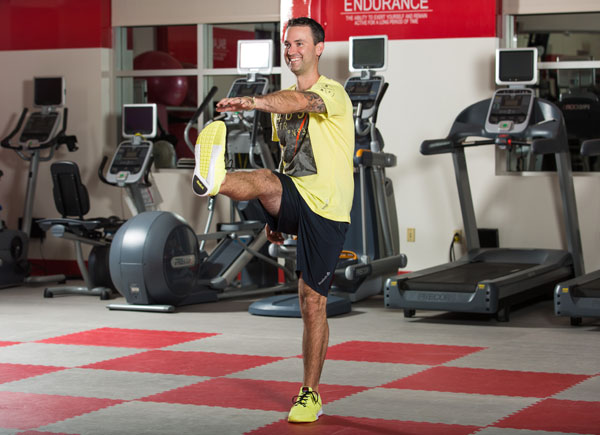
leg kicks
When it comes to injury prevention, ensuring adequate joint mobility is imperative. The body is comprised of joints that tend to favor stability—such as the knees and lumbar spine—and joints that favor mobility—including the ankles, hips, thoracic spine and shoulders. To get more out of your movements, your workouts should include a dynamic warm-up to enhance range of motion in these four areas. This should include movements that mimic the five primary movement patterns: bend-and-lift movements (squatting); single-leg movements (lunging); pushing; pulling; and rotational or twisting movements. The warm-up should serve as a dress rehearsal for specific exercises within a given workout, activity or sport, an to increase core body temperature, address movement deficiencies, improve joint range of motion and reduce the risk of injuries in both the gym and during everyday life.
Don’t: Focus only on one area.
external rotator stretch
Flexibility training, like resistance training, is joint specific, meaning there’s not one specific exercise or stretch to do to improve your overall flexibility. Instead, incorporate a variety of different movements and stretching techniques into your training to target the major muscle tendon units of the neck, chest, shoulder girdle, trunk, lower back, hips, legs and ankles.
Do: Mix up your approach.
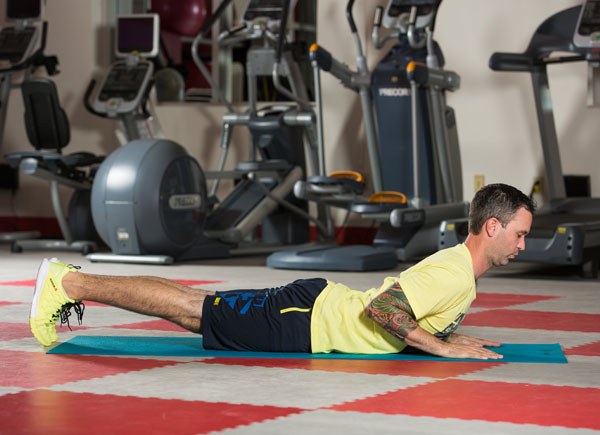
upward facing dog
From proprioceptive neuromuscular facilitation (PNF) with a partner to static stretching in mind-body modalities like yoga, mixing up your approach to flexibility will not only offer improvement in range of motion around the joints, it will also keep this component of your workout routine exciting and ultimately more enjoyable.
Don’t: Make it painful.
chest stretch
As is the case with any aspect of fitness, when it comes to flexibility training, you want to feel challenged. However, there’s a big difference between slight discomfort and extreme pain. When performing static stretching, make it a point to stretch only to the point of feeling mild tightness or slight discomfort to ensure the greatest level of safety and effectiveness.
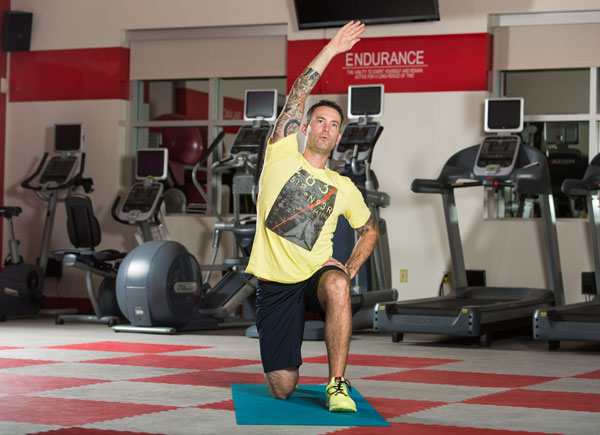
Do: Make it a priority.
kneeling stretch
Studies have shown that while range of motion around a joint is improved immediately following flexibility exercises, chronic improvements are seen after three to four weeks of regularly stretching at least two to three times per week. For the greatest benefit, perform your flexibility training after your resistance-training workouts and stay committed in your approach to stretching regularly.
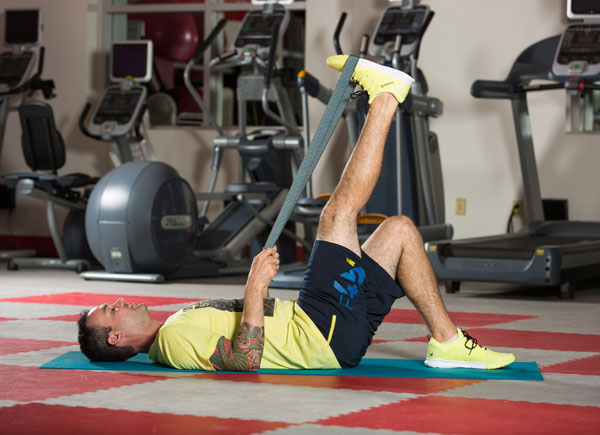
Don’t: Skimp on static stretching.
hamstring stretch
For best results, aim to hold each static stretch for 15 to 30 seconds and repeat each one two to four times, completing a total of 60 seconds per joint.
By Jessica Matthews, MS, E-RYT

Jessica Matthews, M.S., E-RYT is assistant professor of exercise science at Miramar College. As a leading fitness expert, writer and educator Jessica is a regular contributor to numerous publications, including Shape and Oprah.com. She holds a B.S. in physical education teacher education from Coastal Carolina University and M.S. in physical education from Canisius College. She is a certified Personal Trainer, Group Fitness Instructor and Health Coach through the American Council on Exercise (ACE) as well as an Experienced Registered Yoga Teacher (E-RYT) through Yoga Alliance and trained stand-up paddleboard (SUP) yoga instructor. Prior to teaching at Miramar, Jessica worked full-time ACE, serving in a number of key roles including exercise physiologist, certification director and senior health and fitness editor. Her past work also includes serving as aquatics director at Conway Medical Wellness and Fitness Center and designing health and physical education curriculum for grades K-12. 

More info on Jessica Matthews »