Want Quick Happy tips? Head over to Marc and Angels Hack

Practical Tips for Productive Living - Wonderful Quick and effective reading articles around the wellbeing, happiness and positiveness in bullet points numbers. I personally use it for easy reference

Want quick inspiration? Inspiration Peak is the place to go!

Check out and subscribe to Inspiration Peak in my Fav Websites for everyday quotes. Works a charm every single day. You're more than welcome to suggest a quote too!

Mind, Body, Green - Ultimate Wellness articles

I love their articles for it is written by various authors coming from wellbeing, yoga, holistic nutrition background that brings you closer to nature and serenity...

Lifehacker - Tips, tricks, and downloads for getting things done

Slightly drawn towards IT tips but they do also have tips about anything and everything you need under the sun, including tips for baking and cleaning! Check them out

Saturday, December 6, 2014

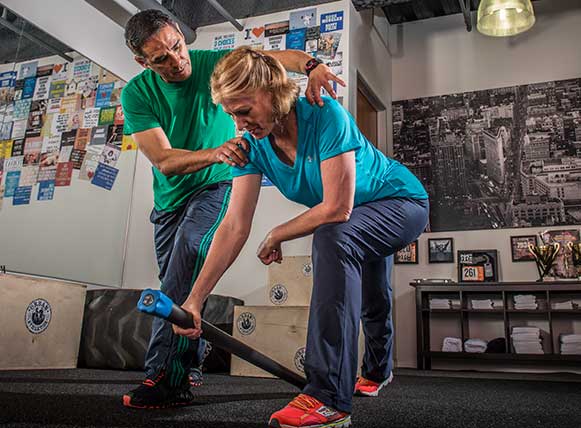
8 Reasons HIIT Workouts are So Effective

box jumps
Time is one of our most precious resources and we never seem to have enough of it. Some days, it might be easy to skip a workout because you feel that you might not have enough time to make it worthwhile. But you don’t need to spend hours in the gym to see results—you simply need to make sure that the time you do spend exercising is as efficient and effective as possible.
Here are eight reasons why you can spend less time exercising with high-intensity interval training (HIIT) and still get great results:
1. Anaerobic interval training uses the body’s reserves of energy and, after a workout, metabolism stays elevated and continues to burn calories for hours after the workout. This is due to something called the excess post-exercise oxygen consumption (EPOC) effect. With HIIT, you not only burn a lot of calories during the workout, but because of the high intensity you will continue to burn calories as your body replaces energy and repairs muscle proteins damaged during exercise.
2. Not only does your body metabolize fat for fuel during the workout, during the post-exercise recovery period after HIIT exercise the body will tap into fat stores for the energy required to restore it to its normal resting state.
3. Your body burns calories at a rate of 5 calories per liter of oxygen consumed. In general, using exercise to increase the oxygen demands on your body will increase total caloric expenditure both during and after the workout. Short intervals of extremely high-intensity exercise involving a lot of muscle mass require a tremendous amount of oxygen, during both the work interval and the recovery periods.
4. HIIT produces a significant amount of metabolic waste, including hydrogen ions and lactic acid. The major reason for an active recovery interval is to remove these waste products to allow the involved muscles to perform the next high-intensity bout. As a result, HIIT workouts train your body to tolerate and quickly recover from periods of high-intensity exercise.
5. HIIT can promote a number of physiological benefits, such as increased mitochondrial density, improved stroke volume, improved oxidative capacity of muscle and enhanced aerobic efficiency, which was previously thought to occur only as a result of long, slow distance (LSD) training protocols.
6. HIIT places a significant amount of metabolic stress on muscle tissue. As part of the repair process, the body will produce elevated levels of human growth hormone, testosterone and insulin-like growth factor-1 to repair damaged muscle proteins, which lead to increases in muscle volume and definition.
7. Many health clubs and workout studios are applying this science to develop group fitness programs that feature HIIT workouts in formats that are 30 minutes or less. These formats enable you to do more work and receive numerous health benefits in less time.
8. Exercise intensity can be measured with a scale of perceived exertion, where 1 is low intensity and 10 is the highest intensity you can tolerate. For the greatest benefits, HIIT should be performed at an eight or higher for periods lasting 30 seconds or less (or to the point of breathlessness). Recovery intervals should be as long or slightly longer than the work interval (or until breathing is quick, but under control). An effective workout should have a five- to seven-minute warm-up period to elevate heart rate, a minimum of five high-intensity work intervals and a four- to six-minute cool-down period to help start the recovery process.
One of the most common misperceptions about exercise that it is necessary to spend hours busting your butt and sweating buckets to obtain benefits like weight loss, muscle growth and improved overall health and well-being. Instead of working longer, work smarter by using short intervals of extremely high-intensity exercise. HIIT is extremely effective, but it can place a tremendous amount of stress on the body. Therefore, it should only be performed two to three times a week with at least 48 hours between exercise sessions to allow a full replenishment of energy stores and to repair of involved muscle tissue. It is still possible to exercise the day after a HIIT session, but it should be a low- to moderate-intensity activity and use different muscle groups or movement patterns than those used in the high-intensity workout.
For individuals with a training goal related to increasing aerobic endurance, such as competing in a 10K, marathon or triathlon, it is still important and necessary to do high-volume LSD training. For individuals training for an endurance event, using a HIIT protocol can help to maintain your training efforts on those days when time is short and the temptation to skip a workout is at its peak.
 

Friday, December 5, 2014

10 Things Moms of Boys Must Do

I can't help it, she hits my spot for now. Another one for the serious laugh....ooooooooooohhh boy indeed.

Scary Mommy » Raising Boys


This fact was a little bit of a cosmic joke, because prior to birthing a domain full of dudes (four, to be exact), I was a total girl’s girl. Makeup, exfoliation, perfume, cute shoes. Fruity drinks instead of whiskey shots. Risk breaking a nail? No thank you. Bugs and worms: ewwwwww.

But being the mother of a male – whether one or many – changes you. It doesn’t mean you have to give up your girly ways (in fact, it’s probably more necessary than ever to preserve at least some of them), but parenting someone of the opposite sex can bring challenges that you’ve just got to adapt to.
You’re welcome.

1. You must love bath time. And by “bath time” I don’t mean you yourself sitting there in a candle-lit bathroom with an inflatable pillow and a tub full of luxurious rose-scented suds. I mean you must love giving baths, because boys require a lot of them. You must be prepared for drenching splashes, a wet-dog smell, a soaked floor, and tons of dirty towels. Same when they get old enough to take a shower by themselves – except then, there’s the added “bonus” of the wet-dog smell lingering after they’re done, even though the body wash is disappearing like they’re eating it. Unless you stand at the door and remind them twenty times to use soap … everywhere!

IMG_2818
(PS – don’t buy expensive body wash.)
2. You must think farts are funny. By the grace of God, I was born with this toilet-humor-loving trait, so I have had a pretty easy time dealing with this aspect. Boys think farts are funny: period. And the way you handle that can determine your stress level. If you laugh with them, you’ll all benefit. If you try to get them to stop laughing about it, it will only make things worse. Just stress that there are appropriate times and places to let one rip (i.e., not during the silent part of church or while eating at a restaurant) and you’ll be good to go. Even if you personally don’t find farts humorous (in which case, I’m wondering why you’re on my blog), you have to learn to tolerate those who do. Because there’ll be a lot of that going on.

3. You must be prepared for constant – CONSTANT – battle with the toilet. From the time I found out I was expecting my first boy, I was dead-set on one thing: teaching him to use the toilet properly. You know, putting the seat down and stuff. Common courtesy. I have always been a straight-up dictator diligent with my sons when it comes to that, because one of my fears is that they grow up to be men who don’t put the seat down. Ick. But despite my best efforts, there’s always something. One remembers to put the seat down, but not to flush. One remembers to flush, but doesn’t close the lid. One leaves toilet paper in weird places, like hanging out of the bowl or on the floor (WTF?). And they all sprinkle when they tinkle. I am forever reminding them to aim! Flush! Put the seat down! Close the lid! And then to add insult to injury, I have to clean it. It’s seriously exhausting to keep a clean toilet when there’s a boy (or a few) using it.

4. You must rethink your standards of “safety.” Okay, nobody call child protective services on me – I’m not talking about letting your kids ride without a car seat or letting them play with a lighter. But think about the mom you know (and we all know at least one) who sterilizes her kid’s pacifiers and bottles religiously. The mom who hovers endlessly and gasps loudly when her precious snowflake takes a teensy-weensy tumble. You know that mom? Yeah. You can’t be that mom when you have a boy, because boys are just rough. They jump off of things and slide down things and climb up things and roll and tumble and tackle and leap and pounce and run. ALL THE TIME. They taste dirt and kitty litter and glue and hardened gum from beneath park benches and restaurant tables just out of curiosity (I mean, one of my boys ate candy that had been peed on). They try to ride their bikes, scooters, and skateboards faster than everyone else … and try to out-jump everyone else on trampolines. And if you’ve got multiple boys? Fuhgeddaboutit. They do all that plus wrestle, and occasionally get into full-blown knock-down drag-out fights.

10320492_10152140643529423_5385493821353470047_n

Just stock up on Band-Aids and look the other way for a little bit. For your own sanity.

5. You must not be surprised at drama. I wish I had a dollar for every time someone told me, “Oh, you’re so lucky – boys are way less dramatic than girls.” … Really? Because my boys are as dramatic as they come. There is plenty of stomping, eye rolling, sobbing, shouting, door slamming, and general sassiness going on around this place. I don’t know why everybody thinks boys are naturally easy-going, respectful, agreeable creatures. It must be because my sons’ dramatic outbursts are over “legit” things … like me not letting them use my good earphones, or getting relegated to “Player 2″ on the XBox. Right? Recently, my eight-year-old “hated this house and all his brothers” after a burping contest escalated. And after tripping over his shoelace, my Kindergartner flattened himself out on the floor and wailed, complete with tears, “This world is too dangerous for someone like meeeeeee!”

Don’t ever let someone tell you that you’re lucky because boys aren’t dramatic. Seriously. They have no idea.

6. You must be prepared for messes. Sometimes I go slightly insane at the condition of my house. But unless you can afford to hire a full-time housekeeper, messes are just something you’ll have to deal with. And I’m not talking about just clutter from toys. No matter how often you yell and threaten tell them, boys are just not that conscientious about tracking in mud, or grass clippings, or getting toothpaste all over the place, or spilling milk and then maaaaybe half-assed wiping it up with, say, the corner of the tablecloth. (And the boys’ toilet? See #3.) Boys will also wipe boogers on walls and carpets and slop food all over the place like pigs at a trough. This isn’t due to lack of coaching; trust me, I feel like I spend 75% of my waking moments preaching about keeping things neat and tidy. (I spend the other 25% cleaning up the messes that result when my preaching goes in one ear and out the other.)

IMG_1805

All of this intensifies with multiple boys and/or a visit from multiple friends. Which brings us to the next prerequisite …

7. You must have a lot of food on hand at all times. I was so fooled by this one. Because when your kids are really little, they eat virtually nothing, and you think, “I sure am glad my kids aren’t big eaters!” And then they get to this stage where – holy crap – did he just inhale those scrambled eggs? My tiny, twig-like eight-year-old will annihilate a man-sized portion of breakfast and complain that he’s still hungry. And they always. Want. To snack. My refrigerator opens every five minutes when the kids are home. (And in between those five-minute spans, they’re raiding the cabinets.) We spend enough at the grocery store every month to make me feel faint in the checkout line, and we still run out. These little eating machines are like a pack of hungry locusts – and when one has something, they ALL want their own. I can’t wait until they’re all teenagers!*
*Note the sarcasm. I can totally wait. I need time to find a few more jobs and take out a second mortgage so we can almost afford the grocery bill

8. You must be prepared to go through LOTS. And LOTS. Of JEANS. I have written several blog posts about this very subject because seriously? Four boys later and I am still utterly astonished at how fast they can ruin a seemingly-sturdy pair. Denim is supposed to be this rugged fabric, and it may work for lumberjacks, but it’s no match for the crawling, scraping, staining, and scooting of little boys. I find this ironic, though, because …

9. You must be cool with nudity. I don’t know how my boys go through so many pairs of jeans because, hell, it isn’t like they wear them at home. In fact, it isn’t like they wear anything at home. In my experience, from the time they are physically able to remove their own clothing, they will. My boys start stripping down the instant they get home from school. Sometimes they lounge around in their underwear, and sometimes they forego the underwear altogether.

IMG_1567

Which brings us to my very last piece of advice …

10. You must get used to “The Grab.” I’m talking about the penis. The wiener. The tallywhacker. The wee-wee, the pee-pee, the goods, whatever term you use. They are going to grab it every chance they get (see #9 for an approximate estimation of just how many chances they get). Your adorable infant son will reach down to grab his as soon as you take his diaper off, and in my nine years of experience mothering boys, it doesn’t stop after that. They’ll pull on it, stretch it, flick it, anywhere, any time they can get access to it. They’ll do it in the bathtub and while watching TV. I have literally been forced to utter the phrase “Stop wrapping your penis around your fork.” They do it in a way someone might, say, bite their nails or twiddle their thumbs: automatically, absentmindedly, innocently, frequently. After a while, you won’t even notice.
… You’ll probably be too busy cleaning up messes or shopping for new jeans

Wednesday, December 3, 2014

5 Big Fat Lies About Parenthood

To all of the young parents out there, this is for you =)

We can do this thing. Together. Honestly.


cute-little-baby

Looking back over my 13 years of parenting so far, I see many common “truths” about parenthood that have proven to be more fiction than fact. And dishonesty sucks. As someone who prizes truth, especially regarding parenting, I thought I’d shed my own personal light on some of these beliefs. Here are the five biggest lies about parenthood I was told…


1. Breastfeeding Shouldn’t Hurt. Maybe breastfeeding shouldn’t hurt, but it does, at first. Sometimes like a mofo. My mom is a professional lactation consultant, and I nursed three babies into toddlerhood, so I speak from experience. With each baby, breastfeeding hurt for the first couple of weeks. The first time, I was surprised by the pain. The second time, I was like, “WTH, breasts! Don’t you remember we’ve done this before?!” And the third time, I knew to expect a couple of weeks of fairly major discomfort. The latch was fine, but my nipples were on fire. Maybe my newborns had tiny mouths or I have oddly shaped nips or something, but there was a distinct “adjustment period” where nursing hurt like the dickens with each baby.

After a couple of weeks, everything toughened up and evened out and it was smooth sailing from there. But telling parents that breastfeeding shouldn’t hurt is a bit dishonest. Yes, a bad latch can make it worse. Yes, an infection is a whole other ballgame. But the vast majority of moms I’ve talked to say breastfeeding hurts at first.

And it makes sense, really. If marathon runners get chafed nipples from their shirt rubbing against them, moms can certainly get tender nipples from a surprisingly strong little suction cup pumping at their breasts several hours a day.

The problem with saying it shouldn’t hurt, is that when it does, new moms think there’s something wrong with them, like they have some defect that means they shouldn’t breastfeed. It hurts for a while, then it doesn’t. There are ways to mitigate the tenderness until then (Lansinoh was a life saver for me). But let’s stop telling moms it shouldn’t hurt when that’s just not the reality for many.


2. Sleeping Through the Night. I think the entirety of “sleeping through the night” – as if it’s a milestone like crawling or walking that, once achieved, is permanently established – is a big fat lie.
Just last night, our 9-year-old came into our room at 2 a.m. with a bad dream. Last week, it was our 4-year-old. Now that we’re fully past the baby/toddler stage, we have long stretches of time where we get to sleep without interruption, but it’s never a given.

And when they were babies? Around three months, they slept through the night just long enough for us to start telling people they were sleeping through the night. Then they started teething. Then they started crawling and walking and talking, and for some cosmic joke of a reason, felt the need to practice those things at ungodly hours of the morning.

Then the occasional bad dreams kicked in. Then our eldest went through a weird insomnia phase. As I said, we usually get a full night’s sleep these days. But again, it’s never a given.
And you know what the “experts” consider sleeping through the night? Five hours. Five hours is not “through the night.” Five hours is a long nap.

I only watched one episode of “Desperate Housewives,” but one scene still sticks in my mind. A harried mom gets pulled over by a cop, and in explaining herself to the officer, she says, “I haven’t slept through the night in six years, ma’am.”

Best excuse ever.


3. If You Ignore the Whining, It Will Stop. [a.k.a. “If you don’t give in to whining, they won’t do it.” Or, my personal favorite, “Kids only whine because it works.”] Bull phooey.

Kids whine for about 147 reasons, only one of which is to get something you’re not giving them. They whine because they’re cold, because they’re hungry, because they’re tired, because they’re frustrated, because they’re four, because life is unfair, because they can’t find something, because they want attention, because their cereal is soggy, and, perhaps – just perhaps – because they like the sound of their own whiny little voices.

I swear whining is an instinctual response for kids, like gasping or giggling or screaming. Our kids know that whining is not going to get them anything, yet they still whine. Over the years, we’ve tried ignoring, mirroring, laughing, reasoning, punishing, sympathizing, and every other -ing you can think of to override the whine reflex, yet our offspring continue to do it.

Our 13-year-old doesn’t whine anymore. THANK GOD. They do eventually outgrow it. But it happens at much older ages than I ever thought probable before I had kids. And there’s no foolproof way to get them to stop.

None that wouldn’t result in therapy, anyway.


4. Good Parents Never Have Terrible Thoughts. This one is more a lie of omission, as it’s something people just don’t talk about. But from heartfelt conversations with other parents, it’s not an uncommon phenomenon.

It’s understandable that parents who suffered abuse as kids would have to overcome impulses to harm their children. But I never expected to have those thoughts myself.
I didn’t grow up in an abusive household. My parents didn’t even spank. And I’m not a hot-tempered person. Yet I’ve had a few brief moments when it was all I could do not to slap, or shake, or otherwise hurt my child. That’s awful to put into writing. But it’s true.
When our first baby was a newborn, she wasn’t sleeping well, she cried much of the night, and I was utterly exhausted. I’d never been so tired in my life (and still haven’t). I instantly understood how shaken baby syndrome happens.

And in that desperate instant, my mother told me something so shocking and honest and beautiful, I thank her every day for it. She said, “When your brother was a baby and wouldn’t stop crying one night, my instinct was to toss him out the window.”

Holy crap. It wasn’t just me. My even-keeled, emotional rock of a mother had had a terrible mothering thought. Not only that, she used the word “instinct” to describe it. I thought mothering instincts were all fuzzy and warm and protective. But I think we also have a deep, dark, alter-instinct, which, in rock-bottom moments of exhaustion and desperation, briefly surfaces to duke it out with our protective parenting instincts.

It doesn’t show up often, thankfully, for those of us who were blessed with loving upbringings. But it’s there. I know I would never hurt my children, but it’s a terrifying feeling to understand how child abuse can happen. I’m generally quite a patient and loving mother, but I know I’ve set a child down too hard in frustration. I’ve squeezed an arm too tightly in anger. I’ve spoken with a fierceness in my voice that didn’t fit the severity of the situation.

Parenting combined with life in general can push us to ugly places. And the veil of civilization that keeps us in check can sometimes feel very thin. Obviously, my mother would never have thrown my brother out the window, and I know I would never strike one of my children.
But those used to be unfathomable thoughts. Now it’s just the actions that are unfathomable. The thoughts I can understand.


5. Childhood Goes By So Quickly. I’m guilty of perpetuating this lie, even right here on this very blog. It’s a lie that’s true, actually – but only in hindsight.
Have you ever noticed that the people who say childhood goes by quickly are people who are past whatever parenting phase you’re in? Of course it goes by fast when you’re looking backwards. When you climb a mountain and look back down, your perspective from the top makes the distance from the bottom look surprisingly short.

But ask the climber halfway up the slope how short it feels.

When you’re in the daily throes of parenting, childhood goes by very, very slowly. Telling parents it goes by quickly may seem like motivation to enjoy every blessed moment, but it’s a bit like constantly telling a mountain climber to enjoy the scenery. It’s not always helpful.

Sometimes a thick fog rolls in and completely obscures your view. All you can do is look down, put one foot in front of the other, and hope you’re moving in the right direction. Sometimes you’ve just crossed a raging river, narrowly avoided an animal attack, tripped and twisted your ankle, and are hanging by your fingernails from a cliff. In that moment, the last thing you need is someone telling you to “enjoy every moment” because it “goes by so fast.”

Climbing a mountain is awesome, and the views from the plateaus are incomparable, but much of the hike is spent navigating and tackling the terrain. That’s not a bad thing. The climb is where you build muscle, stamina, and character. But it is slow, hard work and should be honored as such.

So yes, it’s easy to say childhood goes by quickly when you’re at the top looking down. But perhaps it would be more motivating for parents who are still scaling that mountain to call down, “I know it’s hard and sometimes you think you might die, but keep climbing! You can do it!” rather than “Enjoy every moment! Doesn’t it go by so fast?”

Perhaps those of us still climbing can agree to stop and smell the flowers in between diaper changes and bedtime battles, and those of you at the summit can save those sweet “doesn’t it go by so fast” sentiments for when we’re able share those gorgeous views with you, k?.

And if you could toss down a rope every once in a while, that’d be great, too.

These aren’t the only lies about parenthood we tend to pass along. And most of the time, we perpetuate these falsehoods with the best of intentions. But if we aren’t honest about parenting in all it’s gory glory, folks start to believe they’re alone in their struggles. And no parent should feel alone.
Our views may look different from our particular vantage point, we may hit different rough spots at different times, but we’re all traipsing our way up this crazy, treacherous, beautiful mountain together. So keep climbing, Mamas and Papas, and share your true experiences with others, please.


We can do this thing. Together. Honestly.

Tuesday, December 2, 2014

When to Work Through the Pain…and When to Take a Break

Sometimes you just don't know where the line is. From black and white, it turns grey.

Maybe this article may help with a few nice tips :)


By Carrie Myers
My clientele is largely comprised of amazing middle-aged and senior women who find it equally amazing when they realize how exercise helps them with daily activities—and then some. So imagine their dismay when they incur an injury or an old chronic one flares up. As their trainer, what would you recommend?

Pain is not a black-and-white issue. Part of where your response comes from will depend on where the pain is, how old it is and how severe it is. A client of mine recently presented with left shoulder pain from a falling injury that had occurred several months before. It seemed to be getting worse. The pain had increased and her range of motion (ROM) decreased. We removed any added resistance from the left side while performing her exercises and added light, dynamic ROM exercises. I also referred her to a sports medicine chiropractor. The chiropractor gave us the go-ahead to continue doing what we were doing, even adding back a little weight. She is now slowly regaining strength and ROM in that joint.

“If the injury is affecting what they do on a day-to-day basis, it should be looked at by a qualified professional,” recommends Rick Kaselj, M.S., owner of Exercises for Injuries out of Kelowna, British Columbia, Canada. “Or if you feel they do not have the physical conditioning, training level or skill, or could make an old injury worse with the training style you do—such as Crossfit, MMA training, etc.—get them to see a qualified professional and ask for exercise guidelines from that professional.”
Delayed Onset Muscle Soreness (DOMS)
This conversation would not be complete without at least touching upon delayed onset muscle soreness or DOMS. It is believed that DOMS is caused by eccentric work, which can cause microtears in the muscles and surrounding tissues, and hence, soreness and tenderness. It typically occurs 24 to 48 hours following a workout in which intensity was increased and the resistance load was more than the muscles are used to lifting. DOMS can be headed off by including a good, effective warm-up and gradual progression of resistance. But what if DOMS has already set in? Should your clients continue to work out?
It is best, says Kaselj, to rest, but keep moving. “Try to do low-level activity, like walking.”
But avoid more intense activity. DOMS is the body’s way of saying it needs time to heal and recover. Remember, there are microtears in the muscles. Because DOMS impairs athletic performance and strength, it is better to give the body the rest it needs so your client can get back to his or her normal level of activity within a few days; otherwise, your client may be benched for much longer.
While the jury is still out as to what definitively reduces DOMS, give your clients these suggestions a try and advise them to do what helps their bodies feel better.
Stay—or become—well-hydrated. Some believe this will help flush the body of any byproducts produced from higher-intensity exercise. Being well-hydrated also aids in flexibility, speaking of which...
Try massage and acupuncture. If paying for a massage, opt for a lighter touch. Now is not the time for deep tissue massage! Acupuncture can help block nerve pathways, thereby reducing the perception of pain.
Ice the affected area to help reduce inflammation; also try alternating heat therapy with ice therapy.
Apply a topical menthol ointment, such as Biofreeze, to sore muscles to help decrease pain.
If a client experiences DOMS on a regular basis, it might be a good idea to refer him or her to a physician or registered dietitian who can advise the client on appropriate nutritional therapies.
Some professionals prefer to err with the utmost caution. “It is never okay to work through the pain,” says Justin Price, creator of The Biomechanics Method. “However, many people do work through pain as their mind and ego like to override their body’s responses to achieve desired outcomes. But your body will always let you know—if you are paying attention to it—when it is time to take a break and not push through the pain.”

Although, he adds, due to the endorphin release and increased blood supply that comes with working out, “it is sometimes difficult to know when you have overdone it. As such, if you experience pain that lasts for more than five to seven days, it is time to ask a healthcare professional to check it out.”
Price recommends you take the opportunity to use a referral to a doctor or physical therapist to improve your own knowledge regarding musculoskeletal dysfunction and how it affects your client’s ability to exercise successfully. “As such, rather than make a referral to a physical therapist or doctor appear like a hassle to your client, you can help them focus on the enhanced service they will receive from you as a result,” Price explains.

“Too often today I think trainers and fitness enthusiasts adopt a ‘no pain, no gain’ mentality,” argues Brant Amundson, Muscle Activation Techniques (MAT) specialist and owner of Muscle Mechanic, LCC, in New York, N.Y. “They constantly push through joint and muscle issues until they get seriously injured or gradually lose the ability to know what it feels like to move and function properly.”
According to Todd Sinett, D.C., inventor of The Backbridge™ System and author of The Truth about Back Pain, there are some specific symptoms that require an immediate halt to exercise. “Numbness or any sign of tingling is a sign of nerve irritation. If you are experiencing any of these symptoms you should stop the exercise immediately and consult with your doctor. Another red flag is that when working out you shouldn’t experience pain when performing a particular exercise. If you do, stop immediately. Yes, the exercise can be difficult and burn, but it should not be painful.”

Amundson suggests taking the following guidelines into consideration when dealing with clients and pain:
  • Cautiously push through when the pain or discomfort gradually dissipates as you continue the activity OR if you’ve taken an immediate break from the “problematic activity” and done some other movement to address the issue and the pain goes away and stays away when you resume the activity. “You can also continue on,” adds Kaselj, “if it feels like general muscle soreness and you have full range of motion of the joint when it is unloaded.”
  • Stop when then pain gets worse or stays the same during the activity.
  • See (or refer to) a qualified professional when you notice a consistent limit in ROM from one side of the body to the other (with or without pain). “For example, if your shoulder flexion is consistently limited on one side, chances are you have a muscular inhibition in those shoulder muscles.” The same goes for chronic tightness or soreness in a particular muscle or joint.
“Trainers can all agree that there’s a fine line between working out through discomfort and working out through the pain,” concludes Trish DeCosta, founder of Love Life Fit, based out of San Diego, Calif. “The popularity of high-intensity exercise may even perpetuate the idea that working out through pain is ‘tough’ or necessary to get great results. It simply isn’t. What’s more is that trainers are usually the worst culprits at taking breaks, and the signs to slow down or stop altogether are usually all there before an injury occurs.”

Sinnett agrees. “Doctors operate by the creed, “First do no harm.’ I believe trainers should develop this mentality as well. Doing too little is better than doing too much. Focusing on the long-term goals of health and fitness is a great way to keep your clients healthy. Slow and steady wins the race!”
____________________________________________________________________
Carrie Myers is owner of CarrieMichele Fitness, author of Squeezing Your Size 14 Self into a Size 6 World: A Real Woman’s Guide to Food, Fitness, and Self-Acceptance, and presents, teaches and trains in N.H. and Vt

Trampoline funny

One to cheer up Monday! Enjoy...


Thursday, November 27, 2014

Best Bicep Exercise (Infographic)

 
Thank you ACE!


Wednesday, November 19, 2014

9 Signs You're A Highly Sensitive Person

Could this be you? It is so me!

Thanks mindandbody green

By Kristen Matthews
November 18, 2014 8:43 AM EST
 

In a world filled with quick fixes and simple solutions, it's easy to get accustomed to the commonality of just "getting by." For years I was guilty of the same. In an attempt to deal with the Read
Has anyone ever told you to calm down, stop being so sensitive, or not take things so seriously? I can say yes, yes, and yes without a blink of an eye. I was the sensitive one in my family, and I guess I still am. We all laugh about it now, because I can easily be brought to tears by so many different things.

I don't question what may be wrong with me anymore, because when you live with people who don't show their emotions like you do, you think something's wrong with you. Age, along with the knowledge that 15-20% of the population is highly sensitive, helped me embrace my personality.

Since discovering that HSPs are such a large group of people, I've learned more about what it really means to be a highly sensitive person. There's much more to this trait than just crying easily.
Below are some common characteristics that people with HSP share; if you recognize these signs in yourself, you may be one too. I can personally relate to each and every one.

1. You're hyper aware of subtleties in their environment.

HSPs usually notice things that other people miss. Maybe it's a new haircut or furniture that's been rearranged. Sounds can startle them easily, and they're more sensitive to certain smells and fabrics.

2. You're easily affected by others' moods.

Everyone is affected by the moods of others, both positive and negative, but the effect is heightened in highly sensitive people. It's great if you're around positive people, but not so great when you're around people with heavy energy.

3. You become overwhelmed quickly.

If you ask an HSP to do too many things at once, she becomes overloaded and rattled. HSPs don't do well in chaotic or stressful situations. Many times highly sensitive people will arrange their lives to avoid overwhelming situations. If they end up in a chaotic environment, they'll probably find a quiet place to down-regulate their overly stimulated brain.

4. You take criticism to heart.

Criticism is part of life. But because highly sensitive people feel things more deeply, they'll hold onto criticism longer than someone not so sensitive. As a result, they tend to be people-pleasers, removing room for criticism. It's important to note that while they hold onto criticism, a compliment will go a long way.

5. You make compassionate friends.

Highly sensitive people are also very intuitive and feel deeply. They're able to empathize with people, to a point where you almost feel like they're going through what you're going through.

6. You're conscientious.

HSP's are very considerate with above-average manners. They're the first to notice when someone is rude or inconsiderate. They'll give up their seat on a bus or move out of the way on the sidewalk without even really thinking about it. It comes naturally to them.

7. You tend to avoid violent movies and TV shows.

Since HSP's rank high on the empathy scale, they tend to stay away from shows with violence or horror in them. They know negative news or violence will upset them, so they do what they can to avoid it.

8. You have a deep appreciation of art, music and nature.

Highly sensitive people are often deeply moved by the arts and nature. The natural beauty of nature is healing and calming to them. Oceans, rivers, and lakes give them a sense of comfort.

9. You don't feel very decisive.

Highly sensitive people think with their emotions. This, coupled with being acutely aware of subtleties and details, makes it harder for them to come to a decision. They can easily get upset if they make the wrong decision or poor choice.